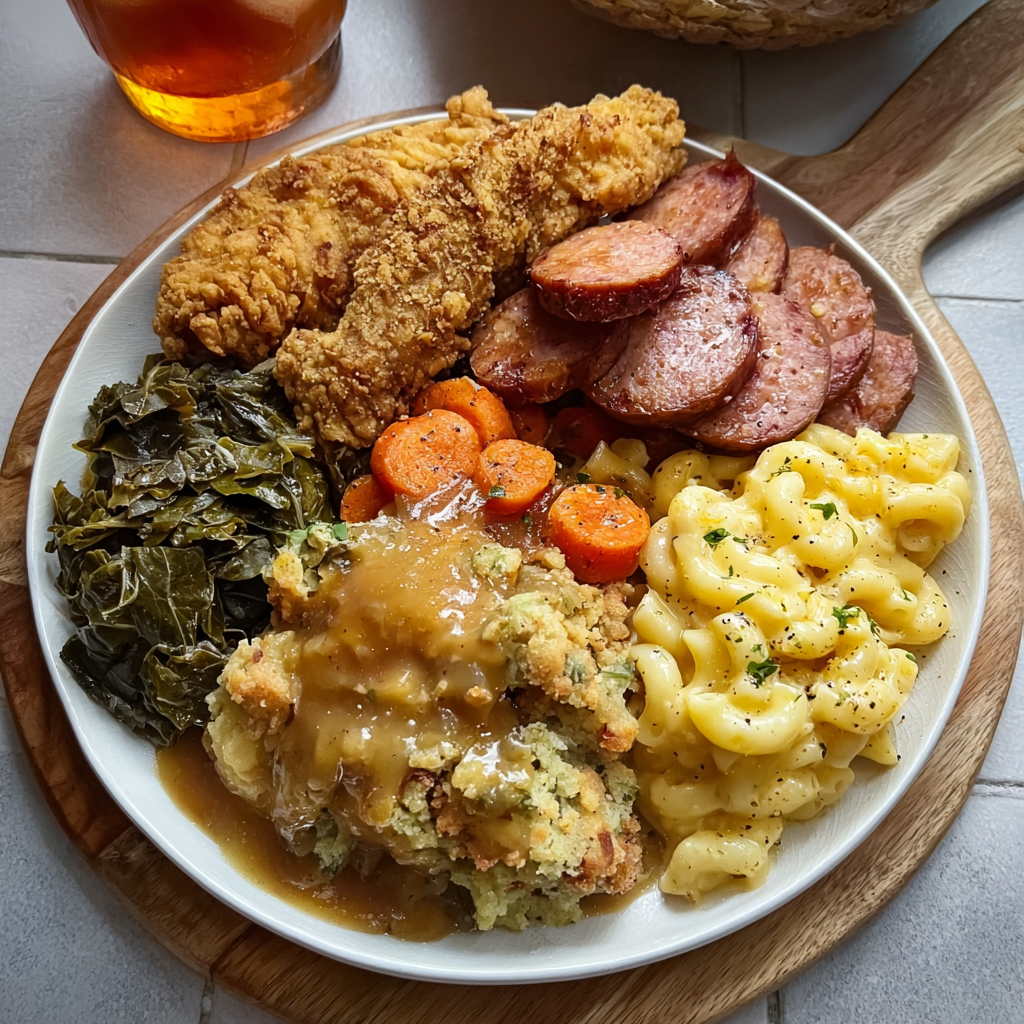
There’s something deeply comforting about a plate piled high with Southern soul food classics, and at the heart of it all sits perfectly seasoned stuffing drenched in silky, savory gravy. This Southern-style stuffing with homemade gravy recipe delivers restaurant-quality results right in your own kitchen, creating that perfect balance of crispy edges and tender, herb-infused center that makes every bite unforgettable.
Whether you’re planning a holiday feast, Sunday dinner, or simply craving the ultimate comfort food experience, this recipe transforms simple ingredients into something extraordinary. The secret lies in the combination of properly toasted bread, aromatic vegetables, fresh herbs, and that luxurious gravy that ties everything together in perfect harmony.
Why You’ll Love This Southern Stuffing Recipe
This isn’t your average stuffing—it’s a flavor-packed side dish that often steals the spotlight from the main course. The texture alone is worth celebrating: crispy, golden-brown edges give way to a moist, tender interior that’s been infused with butter, herbs, and savory broth. Every forkful delivers layers of flavor from the caramelized onions, aromatic celery, fresh herbs, and that irresistible gravy.
What makes this recipe special:
- Uses day-old bread for perfect texture that soaks up flavor without becoming mushy
- Fresh herbs elevate the dish beyond dried seasonings
- The homemade gravy adds restaurant-quality richness
- Crispy top layer provides textural contrast
- Make-ahead friendly for stress-free entertaining
- Versatile enough to customize with your favorite add-ins
- Pairs beautifully with any protein on your plate
The beauty of this recipe is its flexibility. While it shines during Thanksgiving and Christmas, it’s equally welcome at Sunday suppers, potlucks, or any time you need serious comfort food. Plus, it’s surprisingly simple to make—no complicated techniques required, just honest, delicious cooking.
Understanding Your Ingredients
The Bread Base
The foundation of exceptional stuffing starts with your bread choice. Day-old bread is essential because fresh bread contains too much moisture and will turn your stuffing into mush. White bread, French bread, sourdough, or cornbread all work beautifully, each bringing its own character. For traditional Southern flavor, cornbread adds a subtle sweetness and crumbly texture that’s absolutely divine.
Cubing your bread into roughly 1-inch pieces ensures even cooking and maximum surface area for absorbing that flavorful broth mixture. Toasting the cubes in the oven before assembling removes excess moisture and creates structure that prevents sogginess.
The Aromatic Trinity
Celery, onion, and garlic form the aromatic base that gives this stuffing its signature savory depth. Sautéing these vegetables in butter is crucial—it softens their texture, mellows their bite, and develops sweet, caramelized notes that raw vegetables simply can’t provide. Don’t rush this step; those 8 minutes of gentle cooking transform sharp, pungent vegetables into sweet, aromatic building blocks of flavor.
Fresh Herbs Make the Difference
While dried herbs certainly work in a pinch, fresh sage and thyme bring an entirely different level of aromatic complexity to your stuffing. Sage provides that classic poultry-pairing earthiness, while thyme adds subtle floral notes. Fresh parsley brightens everything up and adds a pop of color. If you’re using dried herbs, remember the conversion: 1 tablespoon fresh equals 1 teaspoon dried.
The Binding Elements
Chicken broth and eggs work together to bind your stuffing while keeping it moist. The broth carries flavor into every cube of bread, while the eggs act as a binder that holds everything together once baked. Using quality chicken broth makes a noticeable difference—homemade is ideal, but a good store-bought version works perfectly.
Step-by-Step Instructions for Perfect Stuffing
Preparing Your Bread
Begin by preheating your oven to 350°F. Cut your day-old bread into 1-inch cubes—you want them roughly uniform so they toast and absorb liquid evenly. Spread the cubes in a single layer on a large baking sheet and toast for about 10 minutes, stirring once halfway through. You’re looking for lightly golden and crispy cubes, not completely dried out croutons. This step is crucial for achieving the right texture in your finished stuffing.
Building Flavor with Aromatics
While your bread toasts, heat that butter in a large skillet over medium heat. Once melted and foaming, add your diced celery and onion. Sauté for 6-7 minutes until the vegetables soften and the onions become translucent with golden edges. Add the minced garlic and cook for another minute until fragrant—be careful not to burn it. This aromatic mixture is the flavor foundation of your entire dish.
Combining Everything
Transfer your toasted bread cubes to your largest mixing bowl. Pour the butter and vegetable mixture over the bread, then add your chopped fresh sage, thyme, poultry seasoning, salt, and pepper. Toss everything together so the butter coats the bread and the herbs distribute evenly.
In a separate bowl, whisk together your chicken broth and beaten eggs until well combined. Pour this mixture over the bread gradually, tossing as you go to ensure every cube gets moistened. You want the bread to be thoroughly dampened but not swimming in liquid. Let it sit for a few minutes to allow the bread to absorb the liquid fully.
Baking to Perfection
Transfer your stuffing mixture to a greased 9×13-inch baking dish, spreading it evenly. Cover tightly with aluminum foil and bake for 30 minutes. This covered baking time allows the stuffing to cook through and the flavors to meld. After 30 minutes, remove the foil and bake for an additional 15-20 minutes until the top becomes gloriously golden and crispy. Those crispy bits on top are pure gold—they provide textural contrast to the tender interior.
Making the Perfect Gravy
While your stuffing finishes baking, prepare your gravy. Melt butter in a medium saucepan over medium heat. Whisk in flour and cook for 2 minutes, stirring constantly—this cooks out the raw flour taste and creates a golden roux. Gradually add your broth, whisking constantly to prevent lumps. Start with just a splash, whisking until smooth, then gradually add more. Once all the liquid is incorporated, bring to a gentle simmer and cook until thickened to your desired consistency, about 5-7 minutes. Season with garlic powder, Worcestershire sauce, salt, and pepper.
Pro Tips for Stuffing Success
Moisture control is everything. If your mixture seems too dry before baking, add broth a quarter-cup at a time. Too wet? Add more toasted bread cubes. The mixture should be moist enough that it clumps when squeezed but not dripping wet.
Don’t skip the egg. While some recipes omit eggs, they provide crucial binding that helps your stuffing hold together when serving. Without eggs, you’ll have a crumbly, loose mixture that falls apart.
Season generously. Bread absorbs a lot of salt, so what tastes properly seasoned in the bowl will taste bland after baking. Season boldly, then taste a small spoonful after mixing—it should taste slightly over-seasoned.
The two-stage baking method is key. Covering the stuffing for the first portion prevents the top from over-browning while the interior cooks through. Uncovering for the final stage creates those irresistible crispy edges everyone fights over.
Let it rest. After removing from the oven, let your stuffing rest for 5-10 minutes before serving. This allows it to set up slightly and makes serving much cleaner.
Customization Ideas
The beauty of stuffing is its versatility—it’s a blank canvas for your favorite flavors. Here are some delicious variations:
Add sausage: Brown 1 pound of ground pork sausage and mix it into your stuffing for a heartier, protein-packed version.
Include nuts: Toasted pecans or walnuts add crunch and richness. Add 1 cup of chopped nuts when mixing.
Dried fruit twist: Chopped dried cranberries, apricots, or apples bring sweetness that balances the savory elements beautifully.
Mushroom lovers: Sauté 8 ounces of sliced mushrooms with your aromatics for an earthy, umami-rich version.
Cornbread base: Swap half or all of the bread for crumbled cornbread for authentic Southern flavor.
Spicy kick: Add diced jalapeños or a pinch of cayenne pepper for heat.
Oyster stuffing: A Gulf Coast tradition—fold in a pint of drained oysters for luxurious, briny flavor.
Storage and Make-Ahead Tips
Preparing ahead: Assemble your stuffing completely up to the point of baking, cover tightly, and refrigerate for up to 24 hours. When ready to bake, let it sit at room temperature for 30 minutes, then bake as directed, adding 5-10 extra minutes if needed.
Freezing: Unbaked stuffing freezes beautifully for up to 3 months. Wrap tightly in plastic wrap, then foil. Thaw in the refrigerator overnight before baking.
Storing leftovers: Refrigerate leftover stuffing in an airtight container for up to 4 days. The gravy can be stored separately for up to 5 days.
Reheating: For best results, reheat stuffing in a 350°F oven, covered with foil, for 20-25 minutes. Add a splash of broth to restore moisture. You can also reheat individual portions in the microwave, though the edges won’t be as crispy.
Gravy storage: Store gravy separately in the refrigerator. It will thicken as it cools; simply whisk in a bit of broth when reheating to restore the proper consistency.
Nutritional Benefits
While stuffing is undeniably a comfort food, it does offer nutritional value. Whole grain or whole wheat bread boosts fiber content significantly. The vegetables provide vitamins A and C, while celery offers potassium and vitamin K. Using homemade broth allows you to control sodium levels.
To lighten it up without sacrificing flavor, you can reduce butter slightly, use egg whites instead of whole eggs, or increase the proportion of vegetables. The herbs provide antioxidants and anti-inflammatory compounds, with sage being particularly rich in beneficial plant compounds.
Of course, this is a dish meant to be enjoyed rather than analyzed nutritionally. It’s comfort food that nourishes the soul as much as the body, perfect for gathering around the table with loved ones.
Serving Suggestions
This stuffing pairs beautifully with virtually any protein. The classic combination includes roasted turkey or chicken, but it’s equally delicious alongside:
- Roasted pork loin or pork chops
- Glazed ham
- Pan-seared chicken breasts
- Beef roast or meatloaf
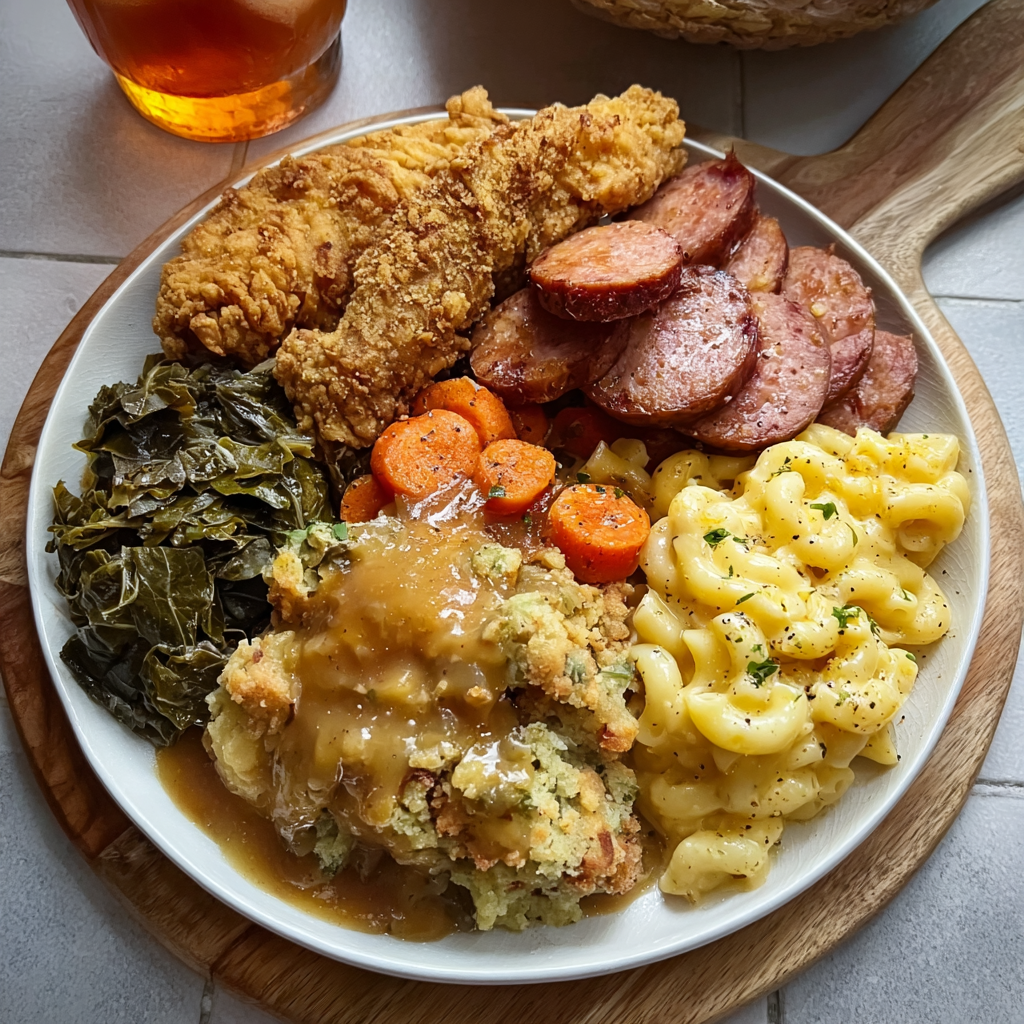
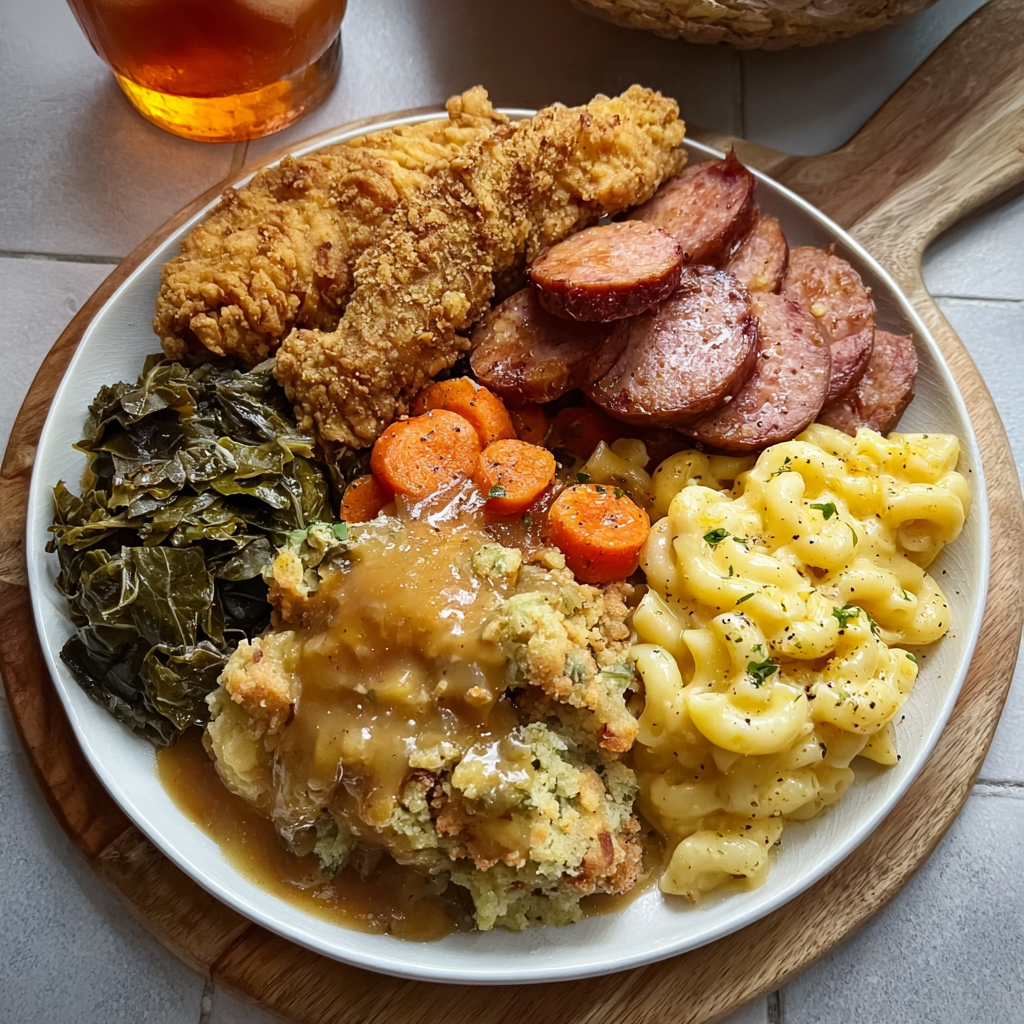
- Fried chicken (as shown in the image)
- Smoked sausage
Round out your plate with complementary sides like the ones shown: creamy mac and cheese, glazed carrots, sautéed collard greens with bacon, and cranberry sauce. Don’t forget fresh dinner rolls for soaking up that extra gravy!
For beverage pairing, this rich, savory dish works beautifully with medium-bodied red wines like Pinot Noir, crisp white wines like Chardonnay, or for a non-alcoholic option, sweet tea or sparkling apple cider.
Why This Recipe Works
The success of this stuffing comes down to technique and timing. Toasting the bread first creates structure that prevents mushiness while still allowing the cubes to absorb flavorful liquid. The combination of broth and eggs provides both moisture and binding power.
Sautéing the aromatics in butter before mixing develops deep, caramelized flavors that raw vegetables simply cannot provide. The butter also coats the bread, adding richness and helping to crisp the exterior during baking.
The two-stage baking process—covered, then uncovered—ensures the interior cooks through and stays moist while the top develops that golden, crispy crust everyone loves. This textural contrast is what transforms simple bread into something extraordinary.
Finally, that homemade gravy brings everything together. The butter and flour roux provides body and richness, while the broth base carries savory depth. Worcestershire sauce adds umami complexity that makes the gravy irresistible.
Conclusion
This Southern-style stuffing with rich homemade gravy represents everything we love about comfort food: simple ingredients transformed into something greater than the sum of their parts. The combination of crispy edges, tender herb-infused center, and that luxurious gravy creates a dish that’s equally at home on a holiday table or at a weeknight dinner.
The recipe is forgiving, customizable, and virtually foolproof once you understand the basic principles. Whether you’re a seasoned cook or just beginning your culinary journey, this stuffing will become a go-to recipe you’ll make again and again.
So gather your ingredients, preheat that oven, and prepare to create a dish that will have everyone asking for seconds. Don’t be surprised when this humble side dish becomes the star of the show—that’s just the magic of really great stuffing.