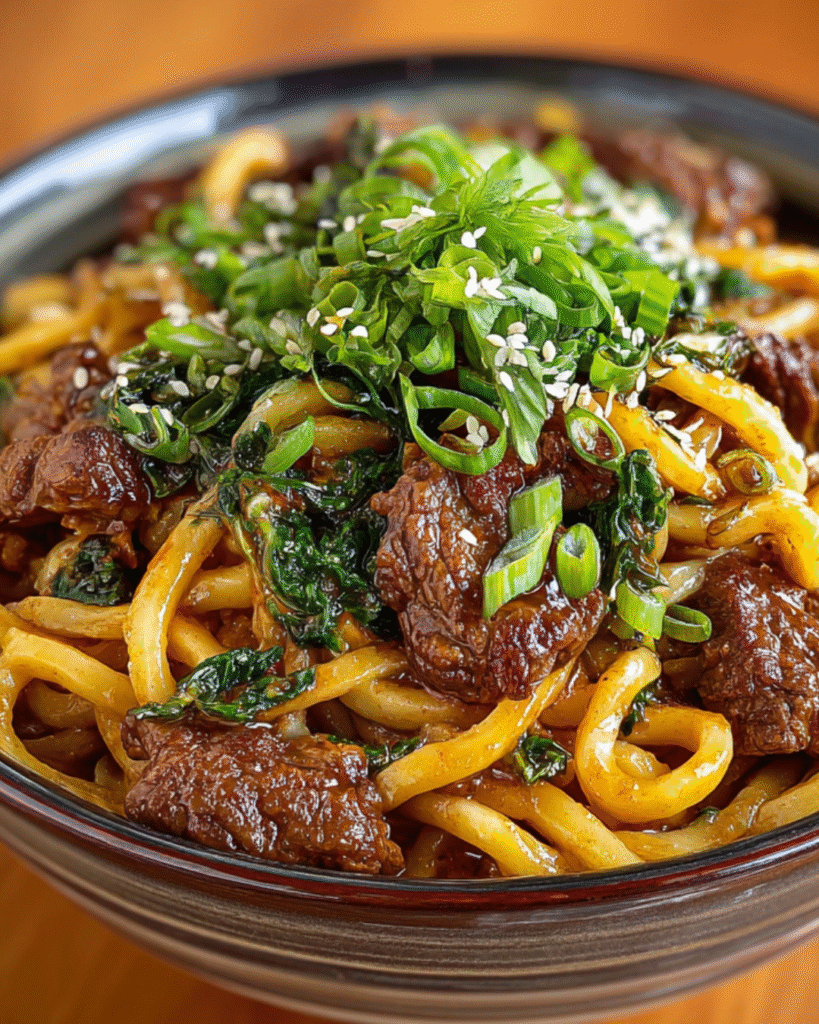
These beef udon noodles deliver authentic Japanese comfort food by combining tender slices of beef sirloin with thick, chewy udon noodles in a savory broth enriched with soy sauce, mirin, and aromatic ginger and garlic. The quick stovetop method preserves the beef’s tenderness while allowing the noodles to absorb the flavorful broth, creating a complete meal-in-a-bowl that satisfies like restaurant ramen but comes together in just 25 minutes. With fresh bok choy adding color and nutrition alongside the hearty noodles and protein-rich beef, this dish exemplifies the kind of satisfying one-pot cooking that makes weeknight dinners both delicious and manageable.
Why You’ll Love This Recipe
Lightning-Fast Execution – From raw ingredients to steaming bowl in just 25 minutes, this recipe delivers complete satisfaction faster than ordering takeout and waiting for delivery.
Authentic Japanese Flavors – The combination of mirin, soy sauce, sesame oil, and fresh ginger creates genuine Japanese taste without requiring specialty ingredients or complicated techniques.
One-Pan Convenience – Using a single skillet or wok for the entire dish means minimal cleanup while the layered cooking process builds complex flavors through strategic ingredient sequencing.
Budget-Friendly Ingredients – Despite tasting like restaurant fare, this recipe uses affordable cuts of beef and accessible vegetables that keep the per-serving cost remarkably low.
Highly Customizable Base – The straightforward formula welcomes protein swaps, vegetable additions, and spice adjustments that let you adapt the dish to dietary needs or ingredient availability.
Genuinely Satisfying Portions – The combination of protein, vegetables, and substantial noodles creates meals that fill you up properly without feeling heavy or leaving you hungry an hour later.
Ingredients You’ll Need
Main Ingredients
8 ounces udon noodles – Provides the thick, chewy foundation that defines this dish and should be fresh or frozen Japanese-style wheat noodles rather than thin varieties, offering substantial texture that holds up in broth.
1 tablespoon vegetable oil – Creates the cooking medium for searing the beef and prevents sticking while contributing neutral flavor that doesn’t compete with the Asian seasonings.
8 ounces beef sirloin, thinly sliced – Delivers protein and rich beef flavor while remaining tender when quickly cooked, with thin slicing being essential for proper cooking in the brief stir-fry time.
2 cups beef broth – Forms the savory liquid base that becomes the flavorful soup surrounding the noodles, with quality broth making a noticeable difference in the final taste.
1 tablespoon soy sauce – Contributes saltiness and umami depth that seasons the broth while adding that characteristic Japanese flavor profile expected in udon dishes.
1 tablespoon mirin (or rice vinegar) – Adds subtle sweetness and complexity that balances the salty soy sauce, with mirin being preferred for its authentic sweet rice wine flavor though rice vinegar works as substitute.
1 teaspoon sesame oil – Provides aromatic, nutty richness that’s essential to Asian cooking and adds depth that pure vegetable oil cannot replicate.
2 green onions, sliced – Brings fresh, mild onion flavor and bright green color that finishes the dish with visual appeal and sharp, clean taste.
1 cup bok choy, chopped – Contributes tender-crisp texture and mild, slightly sweet vegetable flavor while adding nutritional value through vitamins and minerals.
1 clove garlic, minced – Delivers pungent, savory foundation that enhances the overall flavor profile and adds aromatic complexity when briefly sautéed.
1 teaspoon ginger, grated – Provides sharp, warming spice and distinctive flavor that’s essential to Japanese cooking and adds brightness that cuts through the rich broth.
Salt and pepper to taste – Allows final seasoning adjustment to balance the flavors and compensate for variations in broth and soy sauce sodium levels.
Sesame seeds (optional, for garnish) – Adds subtle nutty flavor and visual interest with textural contrast when sprinkled over the finished dish.
Step-by-Step Instructions
Cook the Udon Noodles Bring a large pot of water to a rolling boil and cook the udon noodles according to the package directions, which typically takes 2-3 minutes for fresh or frozen noodles. Drain them thoroughly in a colander and set aside, giving them a quick rinse with cool water if they seem sticky to prevent clumping while you prepare the rest of the dish.
Sear the Beef Slices Heat the vegetable oil in a large skillet or wok over medium-high heat until it shimmers and a piece of beef sizzles immediately when added. Add the thinly sliced beef in a single layer, working in batches if necessary to avoid crowding, and cook for 3-4 minutes, stirring occasionally until the beef browns nicely on the outside while remaining slightly pink inside since it will cook more later.
Remove and Set Aside Beef Transfer the seared beef to a clean plate using tongs or a slotted spoon, leaving behind any rendered fat and browned bits in the pan. These flavorful fond particles will contribute significantly to the broth’s depth, so resist the urge to wipe out the pan at this stage.
Sauté the Aromatics Add the minced garlic and grated ginger to the same hot skillet, stirring constantly for about 30 seconds until they become fragrant and slightly golden. Watch carefully during this brief cooking time since garlic and ginger can burn quickly, which would make them taste bitter and ruin the dish’s flavor profile.
Build the Broth Base Pour in the beef broth, soy sauce, mirin, and sesame oil, stirring to combine while scraping up any browned bits stuck to the bottom of the pan with a wooden spoon. Bring the mixture to a gentle simmer over medium heat, which should take about 2-3 minutes, and let the flavors meld together briefly.
Add Vegetables and Beef Add the chopped bok choy to the simmering broth along with the previously cooked beef, stirring gently to distribute everything evenly. Let the mixture simmer for 2-3 minutes until the bok choy stems become tender but still retain some crunch and the leaves wilt completely while the beef finishes cooking through.
Incorporate the Noodles Add the cooked udon noodles to the skillet, using tongs or chopsticks to gently toss them with the broth, beef, and vegetables until everything is well combined and the noodles have absorbed some of the flavorful liquid. Let everything heat together for about 1 minute to ensure the noodles are hot throughout.
Season and Serve Taste the broth and adjust the seasoning with salt and pepper as needed, keeping in mind that soy sauce has already contributed significant saltiness. Divide the noodles, beef, vegetables, and broth among four bowls, garnish with sliced green onions and sesame seeds if using, and serve immediately while steaming hot.
Recipe Notes & Tips
Beef Slicing Technique – Partially freeze the beef sirloin for 20-30 minutes before slicing to make it much easier to cut paper-thin slices that cook quickly and remain tender.
Udon Noodle Options – Fresh udon from the refrigerated section offers the best texture, but frozen or even vacuum-sealed shelf-stable varieties work well when fresh isn’t available.
Broth Quality Matters – Use good-quality beef broth or better yet, homemade stock for superior flavor, as the broth forms the foundation of this dish and weak broth yields disappointing results.
Don’t Overcook the Beef – Since the beef gets cooked twice—once during searing and again when returned to the broth—err on the side of undercooking during the initial sear to prevent tough, dry meat.
Bok Choy Substitutions – If bok choy is unavailable, substitute with napa cabbage, spinach, or other Asian greens that will wilt nicely in the hot broth without becoming mushy.
Make it Spicier – Add sriracha, chili oil, or red pepper flakes either to the broth during cooking or as a condiment at the table for those who prefer more heat.
Nutritional Information
Prep Time: 10 minutes
Cook Time: 15 minutes
Total Time: 25 minutes
Servings: 4 bowls (approximately 2 cups per serving)
Calories: Approximately 380 calories per serving
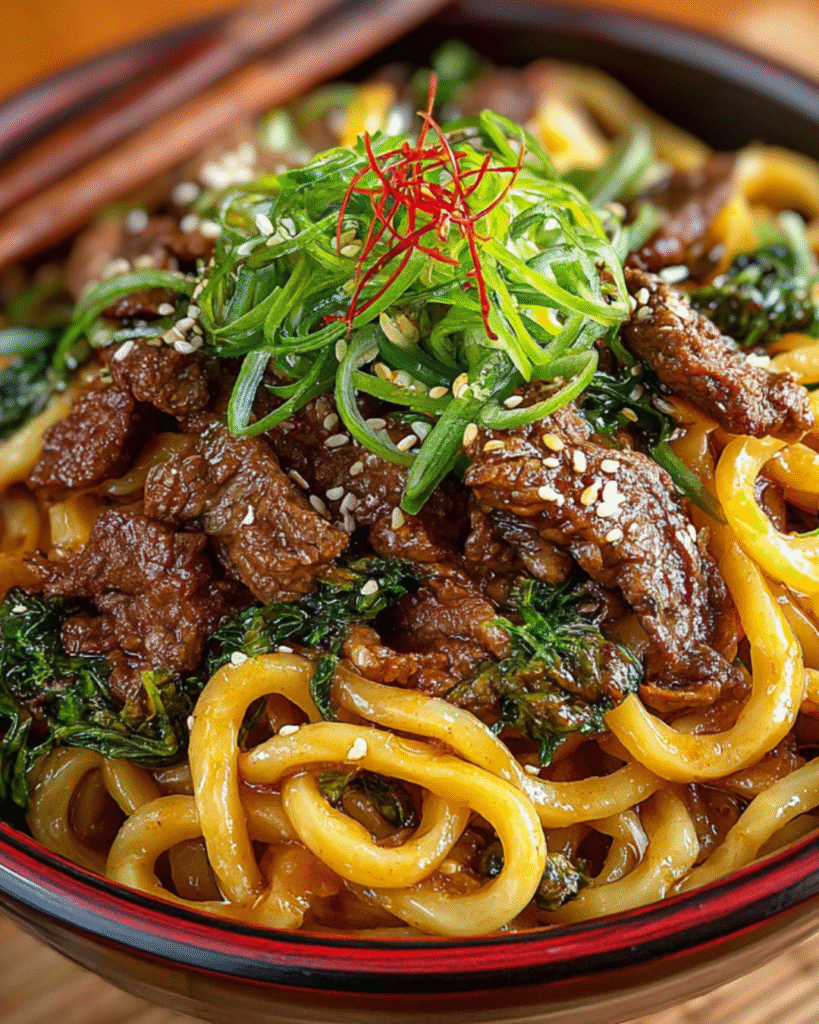
Perfect Pairings
Gyoza or Potstickers – Pan-fried dumplings make an excellent appetizer that complements the noodle soup while adding variety to the meal’s textures and flavors.
Cucumber Salad – A simple salad of sliced cucumbers dressed with rice vinegar and sesame seeds provides cooling contrast and refreshing crunch alongside the warm, savory noodles.
Edamame – Steamed soybeans sprinkled with sea salt offer a protein-rich side that’s quintessentially Japanese and adds nutritional value without competing with the main dish.
Green Tea or Japanese Beer – Traditional beverage pairings that cleanse the palate between bites and complement the Asian flavors without overwhelming them.
Ideal Occasions
Quick Weeknight Dinners – The 25-minute total time makes this recipe perfect for busy evenings when you want homemade food but lack the energy for complicated cooking.
Comfort Food Cravings – When you need something warming and satisfying, these noodles deliver restaurant-quality comfort without requiring takeout or significant effort.
Cold Weather Meals – The hot broth and substantial noodles provide exactly the kind of warming satisfaction that makes chilly days more bearable and cozy.
Lunch Meal Prep – Make a large batch and portion into containers for work lunches throughout the week that reheat beautifully and taste even better after the flavors meld overnight.
Storage & Serving Tips
Separate Storage Method – Store the noodles separately from the broth if possible, as noodles absorb liquid over time and can become mushy; combine them only when reheating.
Refrigerator Storage – Keep leftover noodles and broth in airtight containers for up to 3 days, though the texture is best within the first 2 days before the noodles soften too much.
Reheating Technique – Warm the broth separately in a pot or microwave, then add the noodles and beef just until heated through to prevent overcooking the protein or turning the noodles to mush.
Freezing Considerations – While the beef and broth freeze reasonably well for up to 2 months, udon noodles don’t freeze well and become mushy when thawed, so add fresh noodles when serving frozen portions.
Creative Variations to Try
Chicken Udon Alternative – Replace the beef with thinly sliced chicken thighs or breast for a lighter protein option that still provides substantial flavor and satisfaction.
Vegetarian Version – Omit the beef entirely and use vegetable broth, adding extra mushrooms, tofu, and additional vegetables like bell peppers or snap peas for substance.
Spicy Korean Style – Add gochugaru (Korean chili flakes) and a spoonful of gochujang to the broth for a Korean-inspired version with more pronounced heat and fermented complexity.
Seafood Variation – Substitute shrimp or thinly sliced fish for the beef and use fish stock or dashi instead of beef broth for a lighter, ocean-inspired take on the dish.
Troubleshooting Common Issues
Tough, Chewy Beef – This results from overcooking or cutting the meat too thick; always slice very thinly against the grain and cook just until the beef loses its raw appearance.
Mushy Noodles – Overcooking the udon or letting them sit too long in hot broth causes mushiness; cook them just until tender and add them at the very end of the process.
Bland Broth – Weak beef broth or insufficient seasoning creates flat flavor; use quality broth and don’t be shy with the soy sauce, adjusting to taste before serving.
Vegetables Overcooked – Adding the bok choy too early or simmering too long turns it mushy and drab; add it during the final few minutes so it retains some texture and bright color.
Why This Recipe Works
The success of beef udon noodles depends on understanding how to build layered flavors quickly through strategic sequencing and proper heat management. Searing the beef first in hot oil creates flavorful browned bits through the Maillard reaction, which then become incorporated into the broth when liquid is added, creating depth impossible to achieve by simply simmering raw meat in broth. Cooking the aromatics in the beef-flavored oil blooms their essential oils and intensifies their flavors before the liquid cools everything down, maximizing their aromatic contribution. The combination of soy sauce and mirin provides the classic Japanese flavor balance of salty and sweet that defines authentic udon dishes, while sesame oil adds the nutty richness that makes Asian soups so satisfying. Adding the beef back into the simmering broth for the final cooking stage ensures it finishes cooking gently without becoming tough while also infusing the broth with additional beef flavor. The bok choy requires only brief cooking to become tender while retaining its crisp texture and vibrant color, adding both visual appeal and nutritional value. Udon noodles are specifically designed to absorb flavors while maintaining their chewy texture, making them ideal for soup applications where thinner noodles would become soggy. At approximately 380 calories per serving, this dish provides balanced nutrition with substantial protein, moderate carbohydrates from the noodles, and vegetables contributing fiber and vitamins, making it a genuinely healthy meal despite being so satisfying and flavorful.
Final Thoughts
Beef udon noodles represent the kind of accessible international cooking that brings restaurant flavors into home kitchens without requiring specialty equipment or hard-to-find ingredients. This recipe proves that Japanese cuisine isn’t limited to sushi or complicated preparations requiring years of training, but includes everyday comfort foods that regular home cooks can master with basic skills and attention to detail. The quick cooking time makes this dish practical for real-world weeknight schedules, while the bold, satisfying flavors ensure nobody feels like they’re compromising or settling for something rushed. While the recipe is naturally lower in fat compared to many comfort foods, you can adjust the richness by using fattier cuts of beef or adding more sesame oil if you prefer a more indulgent version, making it adaptable to various dietary preferences and nutritional goals.