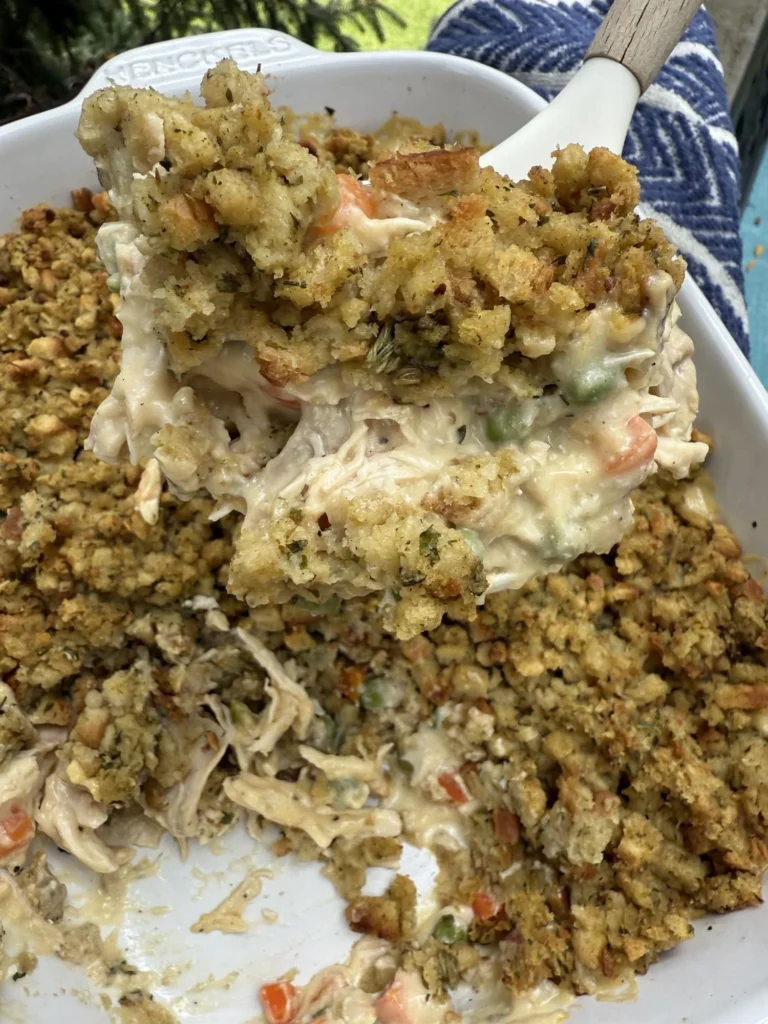
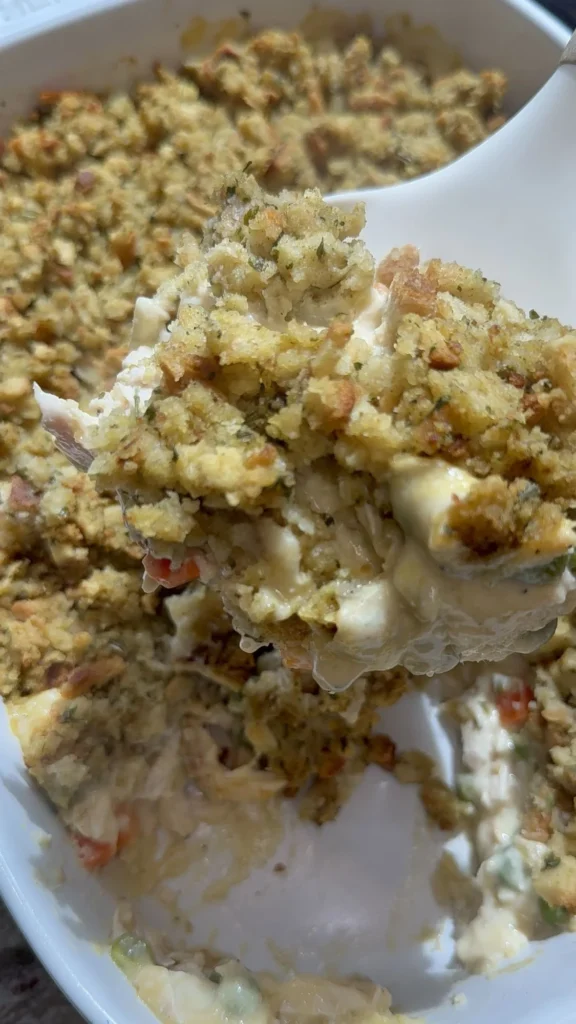
This cozy, one-pan dish delivers the comforting flavors of a holiday dinner without the hours of preparation. Tender shredded rotisserie chicken and colorful vegetables are simmered in a creamy, savory sauce, all hidden beneath a golden, herb-seasoned stuffing crust. It is a hearty, “stick-to-your-ribs” meal that combines convenience and nostalgia in every bite.
Why You’ll Love This Recipe
- Taste of Thanksgiving Anytime – Enjoy the classic flavor profile of roast chicken and herb stuffing on a regular Tuesday night.
- Rotisserie Shortcut – Using pre-cooked rotisserie chicken drastically reduces prep time and ensures the meat is tender and seasoned.
- Creamy Comfort – The blend of two cream soups and sour cream creates a rich, velvety sauce that prevents the casserole from drying out.
- Texture Contrast – The soft, creamy filling pairs perfectly with the crispy, buttery edges of the baked stuffing topping.
- Pantry Friendly – It relies on shelf-stable staples like boxed stuffing and canned soups, making it a great emergency dinner option.
- One-Dish Wonder – Assembled and baked in a single 9×13 dish, cleanup is minimal and serving is simple.
Ingredients You’ll Need
The Savory Filling
- Rotisserie Chicken (2 cups, shredded) – Provides convenient, flavorful protein; remove the skin before shredding for a better texture.
- Cream of Chicken Soup (10.5 oz can) – Adds a savory poultry flavor and thickens the sauce base.
- Cream of Celery Soup (10.5 oz can) – Adds a subtle herbal depth that complements the stuffing.
- Sour Cream (½ cup) – Introduces a tangy creaminess that balances the salty condensed soups.
- Frozen Peas and Carrots (1½ cups, thawed) – Adds color, nutrition, and a sweet vegetable bite to the filling.
- Seasonings (Salt, Pepper, Garlic Powder) – Used to season the chicken mixture, ensuring the filling isn’t bland compared to the stuffing.
The Stuffing Crust
- Stove Top Stuffing (2 boxes, Savory Herbs) – The star carbohydrate; the herb blend mimics traditional homemade stuffing.
- Chicken Broth (2 cups) – Hydrates the dried bread crumbs, adding moisture and savory chicken flavor.
- Butter (1 stick, melted) – Essential for richness and for helping the stuffing brown and crisp up in the oven.
Step-by-Step Instructions
Step 1: Preheat and Prep
Preheat your oven to 350°F (175°C). Grease a 9×13-inch baking dish with butter or non-stick cooking spray to prevent sticking and ensure easy serving.
Step 2: Hydrate the Stuffing
In a large mixing bowl, combine the contents of both boxes of stuffing mix. Pour in the melted butter and the chicken broth. Stir gently until all the breadcrumbs are moistened. Set this bowl aside for 5 minutes to allow the liquid to fully absorb into the bread.
Step 3: Season the Chicken
In a separate large bowl, place the shredded rotisserie chicken. Season it generously with salt, pepper, and the garlic powder (1 tbsp), tossing to coat the meat evenly.
Step 4: Create the Filling
To the seasoned chicken, add the cream of chicken soup, cream of celery soup, sour cream, and the thawed peas and carrots. Stir everything together until the mixture is uniform and creamy.
Step 5: Assemble the Casserole
Pour the creamy chicken and vegetable mixture into the prepared baking dish. Use a spatula to spread it out into a flat, even layer, ensuring it reaches the corners.
Step 6: Add the Topping
Spoon the hydrated stuffing mixture over the top of the chicken layer. Spread it gently to cover the filling completely, creating an even crust. Do not pack it down too tightly, or it will become dense.
Step 7: Bake
Place the dish on the center rack of the oven. Bake for 30–40 minutes. You are looking for the filling to be hot and bubbling around the edges and for the stuffing topping to turn golden brown and crispy.
Step 8: Rest and Serve
Remove the casserole from the oven and let it sit for 5 minutes. This resting period allows the sauce to thicken slightly and makes it easier to scoop. Serve warm.
Recipe Notes & Tips
- Thaw the Veggies – Ensure your frozen peas and carrots are thawed (or rinse them under warm water) before mixing. If they are frozen solid, they can cool down the filling and release excess water during baking.
- Don’t Over-Mix Stuffing – When mixing the broth and stuffing, stir just until combined. Over-mixing can break down the breadcrumbs and result in a mushy texture rather than fluffy distinct pieces.
- Sodium Control – This dish can be salty due to the boxed stuffing and canned soups. Opt for low-sodium chicken broth and “unsalted” butter if you want to control the salt level.
- Browning the Top – If the stuffing isn’t crispy enough after 40 minutes, you can switch the oven to broil for 1–2 minutes. Watch it closely to prevent burning.
- Chicken Alternatives – If you don’t have rotisserie chicken, you can use any cooked chicken (poached breasts or thighs), or even leftover holiday turkey.
Nutritional Information
- Prep Time: 10 minutes
- Cooking Time: 40 minutes
- Total Time: 50 minutes
- Servings: 6–8 Servings
- Calories: Approximately 450–550 kcal per serving
Perfect Pairings
- Cranberry Sauce – The tart acidity of cranberry sauce cuts through the rich, salty flavors of the casserole, enhancing the Thanksgiving vibe.
- Green Salad – A simple salad with a vinaigrette dressing provides a fresh, crisp contrast to the soft, heavy comfort food.
- Dinner Rolls – Soft yeast rolls are perfect for soaking up any extra creamy sauce on the plate.
- Roasted Green Beans – A side of fresh roasted vegetables adds texture and breaks up the softness of the casserole.
Ideal Occasions
- Post-Holiday Meals – An excellent way to use up leftover turkey and stuffing mix after Thanksgiving or Christmas.
- Busy Weeknights – Quick assembly makes it manageable even on nights with tight schedules.
- Comfort Food Cravings – Perfect for rainy or cold days when you want a warm, filling meal.
- Potlucks – Easy to transport and universally liked due to its familiar flavor profile.
Storage & Serving Tips
- Refrigeration – Store leftovers in an airtight container for up to 3–4 days. The stuffing will soften over time.
- Reheating – Reheat in the oven at 350°F (covered with foil) to keep the stuffing from burning, or microwave individual portions.
- Freezing – You can freeze the baked casserole. Wrap tightly with foil and plastic wrap. Freeze for up to 2 months. Thaw in the fridge overnight before reheating.
- Crisping Leftovers – If reheating in the microwave makes the stuffing soggy, pop the portion in a toaster oven or air fryer for a few minutes to restore the crunch.
Creative Variations to Try
- Vegetable Swap – Substitute the peas and carrots for frozen green beans, corn, or broccoli florets for a different flavor profile.
- Cheesy Twist – Mix 1 cup of shredded cheddar cheese into the chicken filling or sprinkle it between the chicken and stuffing layers.
- Mushroom Lover’s – Sauté fresh mushrooms and onions and add them to the filling for an earthier, deeper flavor.
- Crunchy Topping – Add chopped pecans or walnuts to the stuffing mixture for added texture and a nutty flavor.
Troubleshooting Common Issues
- Soggy Stuffing – This happens if you add too much broth or cover the dish while baking. Bake uncovered to allow moisture to evaporate from the bread.
- Dry Filling – If the chicken layer seems dry, you may have used too much chicken relative to the soup. Ensure the meat is thoroughly coated in the sauce mixture before baking.
- Cold Center – If the edges are bubbling but the middle is cold, your filling might have been too cold going in. Bake for an extra 10 minutes, covering the top loosely with foil if the stuffing gets too dark.
- Mushy Vegetables – Using canned vegetables instead of frozen can lead to mushiness. Frozen vegetables hold their texture better during the bake time.
Why This Recipe Works
This casserole works because it balances moisture management. The stuffing on top acts as an insulator, keeping the chicken mixture moist and creamy, while the heat from the oven crisps the exposed breadcrumbs. The combination of cream of chicken and cream of celery soups creates a complex savory base that mimics a slow-simmered gravy without the effort.
Additionally, the use of sour cream adds a crucial tang (acidity) and fat content that prevents the condensed soups from tasting too heavy or “canned.” It brightens the sauce and ensures a smooth, luxurious mouthfeel that binds the vegetables and meat together.
Final Thoughts
Chicken and Stuffing Casserole is the ultimate low-effort, high-reward dinner. It creates a warm, cohesive meal that tastes like hours of roasting and basting, achieved in under an hour. Whether you are looking for a way to repurpose leftovers or just need a comforting hug in a bowl, this savory, crispy, creamy dish delivers every time.