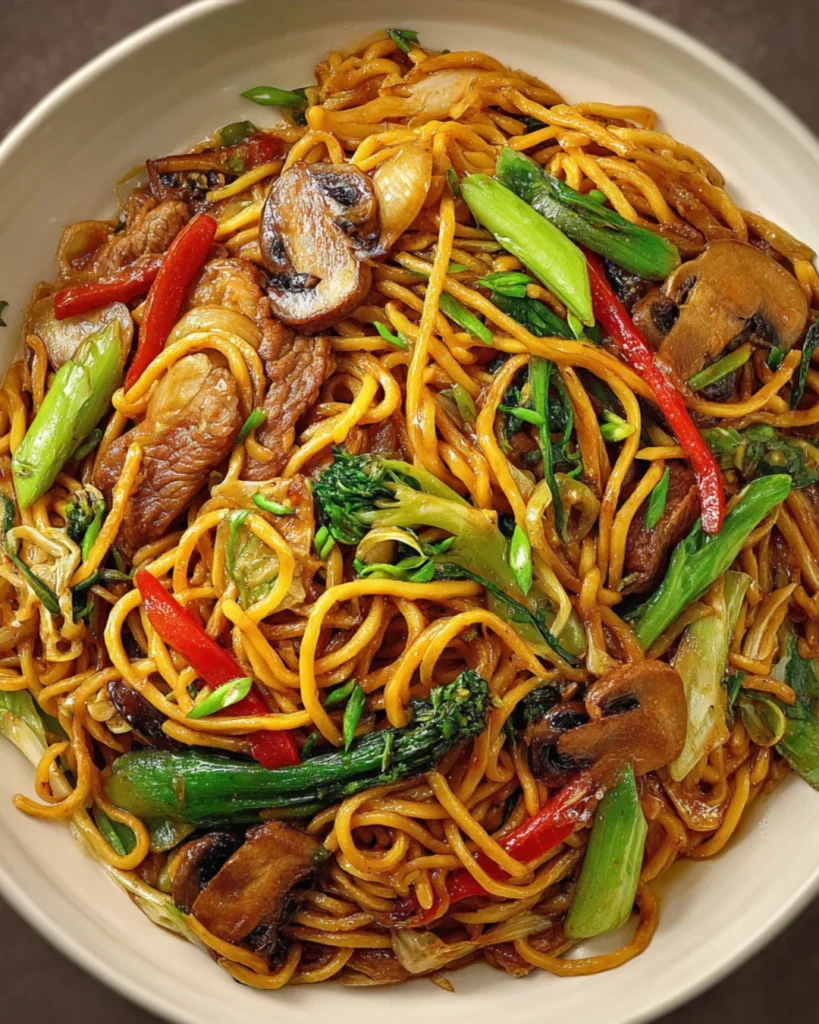
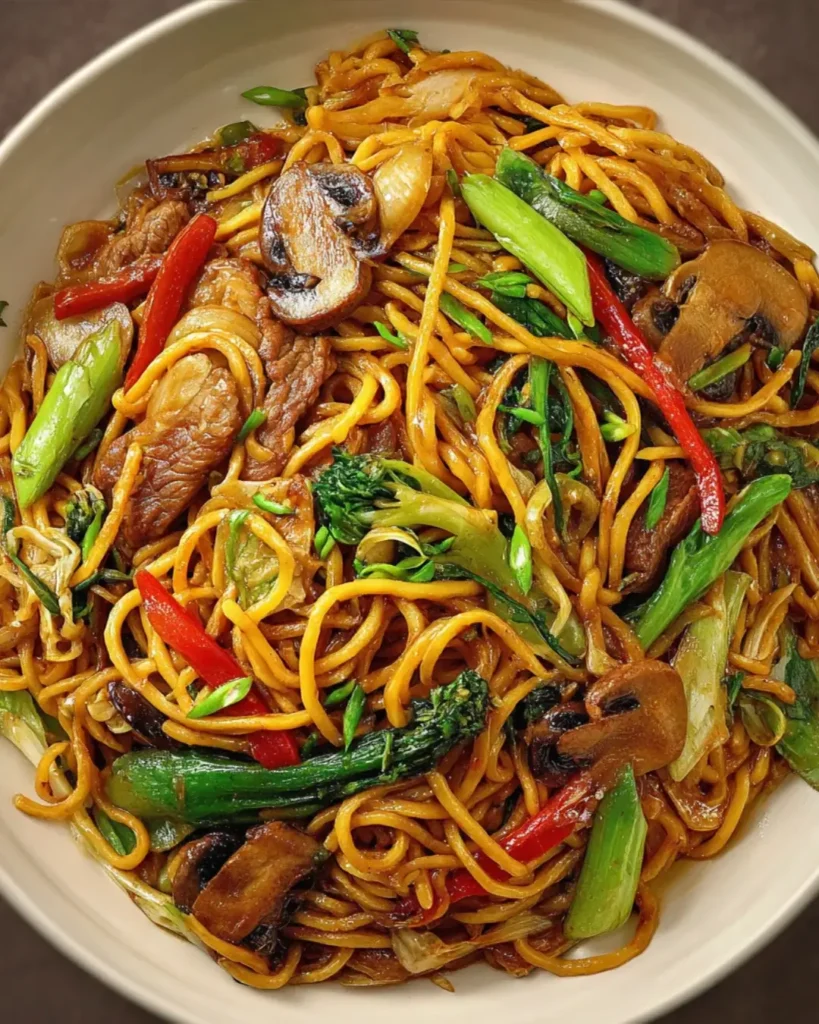
This vibrant vegetable lo mein brings authentic Chinese takeout flavors to your home kitchen by tossing chewy wheat noodles with a rainbow of crisp-tender vegetables in a savory sauce made from soy sauce, oyster sauce, and aromatic sesame oil. The quick stir-fry method over high heat creates that essential “wok hei” (breath of the wok) flavor while maintaining the vegetables’ bright colors and satisfying crunch, delivering a complete, satisfying meal in just 25 minutes that’s healthier, fresher, and more economical than calling for delivery.
Why You’ll Love This Recipe
- Better Than Takeout – Delivers authentic Chinese restaurant flavors and textures while being fresher, healthier, and more economical than ordering delivery.
- Lightning-Fast Dinner – Ready in just 25 minutes from start to finish with only 10 minutes of prep work, making this genuinely achievable even on the busiest weeknights.
- Vegetable-Packed Nutrition – Showcases colorful vegetables that provide vitamins, fiber, and antioxidants while the visual variety makes the dish appealing to all ages.
- Naturally Vegetarian – Contains no meat or animal products (when oyster sauce is omitted), making this perfect for meatless meals or vegetarian households.
- Customizable Base – Easy to add proteins like chicken, shrimp, tofu, or beef to transform this from vegetable-forward to protein-centered based on preferences.
- One-Pan Simplicity – Everything cooks sequentially in a single wok or large skillet, building flavors while dramatically reducing cleanup compared to multi-pot meals.
Ingredients You’ll Need
For the Noodles:
- 8 oz lo mein noodles – Fresh or dried Chinese wheat noodles; substitute spaghetti if lo mein unavailable
- Water for boiling – Generously salted to season the noodles during cooking
For Stir-Frying:
- 2 tbsp vegetable oil – High smoke point oil like peanut, canola, or avocado for proper stir-frying at high heat
- 2 cloves garlic, minced – Infuses the dish with pungent, aromatic flavor
For the Vegetables:
- 1 cup sliced bell peppers (mix of red, yellow, green) – Adds sweet flavor, crunch, and vibrant color
- 1 cup sliced carrots – Contributes sweetness and orange color; slice thinly on diagonal for quick cooking
- 1 cup snap peas – Provides crisp texture and bright green color; snow peas substitute well
- 1 cup bean sprouts – Adds delicate crunch and traditional Asian character
- 3 green onions, chopped – Garnishes with fresh, sharp onion flavor and green-white contrast
For the Sauce:
- 3 tbsp soy sauce – Provides salty, umami-rich base; use low-sodium for better control
- 1 tbsp oyster sauce (optional) – Adds sweet-savory depth and glossy texture; omit for vegetarian version
- 1 tsp sesame oil – Contributes nutty, aromatic finishing flavor
- Salt and black pepper to taste – Adjusts final seasoning to preference
Step-by-Step Instructions
Cook the Noodles Bring a large pot of salted water to a rolling boil over high heat. Add the lo mein noodles and cook according to package directions—typically 3-5 minutes for fresh noodles or 6-8 minutes for dried, until al dente (tender but still with slight bite). Drain the noodles in a colander and rinse briefly under cold water to stop cooking and prevent sticking. Toss with a tiny drizzle of oil if not using immediately. Set aside.
Prepare All Ingredients Before you begin stir-frying, have everything prepped and ready (mise en place)—this is crucial for successful stir-frying since cooking happens quickly. Mince the garlic, slice the bell peppers into thin strips, cut carrots into thin diagonal slices, trim snap peas, rinse bean sprouts, and chop green onions. Measure out the soy sauce, oyster sauce, and sesame oil into a small bowl.
Heat the Wok Heat a large wok or 12-inch skillet over high heat for 2-3 minutes until very hot—you should feel strong heat radiating from the pan when you hold your hand above it. High heat is essential for proper stir-frying; it creates that characteristic slightly charred flavor (wok hei) while keeping vegetables crisp-tender rather than soggy.
Stir-Fry Aromatics Add the vegetable oil to the hot wok, swirling to coat the bottom and sides. Let the oil heat for 10-15 seconds until it shimmers and just begins to smoke. Add the minced garlic and stir-fry for about 30 seconds, stirring constantly with a spatula or wooden spoon, until fragrant and just beginning to turn golden—watch carefully as garlic burns quickly at high heat, and burnt garlic tastes bitter.
Cook the Vegetables Add the sliced bell peppers, carrots, and snap peas to the wok all at once. Stir-fry for 3-4 minutes, tossing and stirring constantly with a scooping motion that lifts ingredients from the bottom and flips them over. The vegetables should become crisp-tender—slightly softened but still maintaining crunch and vibrant color. Don’t overcook or they’ll become mushy and lose their nutritional value.
Add Noodles and Sprouts Add the cooked lo mein noodles, bean sprouts, and chopped green onions to the wok with the vegetables. Using tongs or two spatulas, toss everything together vigorously for 1-2 minutes, lifting and turning to ensure the noodles separate and heat through evenly. The bean sprouts and green onions need minimal cooking—just enough to warm through while maintaining their fresh character.
Apply the Sauce Pour the soy sauce, oyster sauce (if using), and sesame oil evenly over the noodle-vegetable mixture. Toss everything together continuously for 2-3 minutes, ensuring every noodle and vegetable piece gets coated with the savory sauce. The sauce will reduce slightly and become more concentrated, coating everything in a glossy sheen. Taste and adjust seasoning with additional salt and black pepper if needed—the amount depends on your soy sauce’s sodium content.
Serve Immediately Transfer the lo mein to a large serving platter or individual bowls. Serve hot right from the wok when the noodles are still steaming and the vegetables maintain their crisp texture and bright colors. Garnish with additional sliced green onions or sesame seeds if desired. Offer soy sauce, sriracha, or chili oil on the side for those who want to customize their portions.
Recipe Notes & Tips
- High Heat Essential – Stir-frying requires very high heat to cook quickly while maintaining texture; medium heat creates steamed, soggy vegetables instead of crisp results.
- Noodle Options – Fresh lo mein noodles provide best texture, but dried work well; in a pinch, spaghetti or linguine substitute reasonably.
- Vegetable Cutting – Cut vegetables uniformly thin for quick, even cooking; thick pieces won’t cook through in the brief stir-fry time.
- Don’t Overcrowd – If your wok isn’t large enough, cook vegetables in batches; overcrowding drops temperature and causes steaming instead of stir-frying.
- Oyster Sauce Substitute – For vegetarian version, use mushroom-based vegetarian oyster sauce or substitute hoisin sauce for similar sweet-savory depth.
- Protein Additions – Add cooked chicken, shrimp, beef, or firm tofu; cook protein first, remove, then proceed with vegetables and add protein back with noodles.
Nutritional Information
Prep Time: 10 minutes
Cook Time: 15 minutes
Total Time: 25 minutes
Servings: 4 servings
Calories: Approximately 280 calories per serving (based on vegetarian version without added protein)
Perfect Pairings
- Spring Rolls – Serve with fresh Vietnamese spring rolls or fried egg rolls for textural contrast and additional vegetables.
- Hot and Sour Soup – Begin the meal with tangy, spicy hot and sour soup for authentic Chinese restaurant experience.
- Steamed Dumplings – Complement with steamed pork or vegetable dumplings for combination meal that provides variety.
- Asian Slaw – Add crunchy Asian-style cabbage slaw with sesame dressing for refreshing contrast to the warm noodles.
Ideal Occasions
- Weeknight Dinners – Perfect for Tuesday or Wednesday when you want flavorful, satisfying food without spending hours cooking.
- Meatless Mondays – Excellent vegetarian main course that provides enough substance to satisfy even devoted meat-eaters.
- Better-Than-Takeout Nights – Ideal when craving Chinese food but wanting to control ingredients, reduce sodium, and save money compared to delivery.
- Meal Prep Success – Makes good leftovers for next-day lunches, though best enjoyed fresh when vegetables maintain optimal texture.
Storage & Serving Tips
- Refrigerator Storage – Cool completely, then store in an airtight container for up to 3 days; noodles will absorb sauce and become softer.
- Reheating Instructions – Warm in a hot wok or skillet with a splash of water or additional soy sauce for 2-3 minutes; microwave works but reduces texture quality.
- Serving Temperature – This dish is best served hot immediately after cooking when vegetables are at peak crispness and noodles are still separate.
- Portion Planning – Each serving is generous at about 2 cups; for heartier appetites or when serving as main course, consider adding protein.
Creative Variations to Try
- Chicken Lo Mein – Add 1 lb sliced chicken breast or thigh stir-fried before vegetables for classic protein-centered version.
- Shrimp Lo Mein – Toss in 1 lb peeled shrimp that cooks in just 2-3 minutes for seafood variation.
- Spicy Version – Add 1-2 teaspoons chili garlic sauce or sriracha for heat lovers who want extra kick.
- Mushroom Addition – Include sliced shiitake or button mushrooms with vegetables for earthy, umami-rich depth.
Troubleshooting Common Issues
- Mushy Vegetables – Cooked too long or heat too low; stir-fry quickly over very high heat just until crisp-tender.
- Clumped Noodles – Noodles stuck together or weren’t tossed enough; rinse cooked noodles and toss vigorously when adding to wok.
- Bland Flavor – Not enough sauce or seasoning; taste before serving and add more soy sauce, oyster sauce, or salt as needed.
- Watery Sauce – Too much liquid or vegetables released water; ensure vegetables are dry before cooking and use measured sauce amounts.
Why This Recipe Works
This quick stir-fry succeeds by applying proper Chinese cooking technique—high heat, constant motion, strategic ingredient sequencing—to create restaurant-quality results at home. Cooking the noodles separately and rinsing them prevents them from becoming gummy while allowing precise control over their texture. The high heat essential to stir-frying creates the Maillard reaction on vegetables and noodles, developing complex flavors and slight char (wok hei) impossible to achieve at lower temperatures. Stir-frying garlic first in hot oil blooms its aromatic compounds—the heat activates volatile oils that infuse the cooking oil, which then coats everything else added to the wok. Adding firmer vegetables (peppers, carrots, snap peas) before delicate ones (bean sprouts, green onions) ensures everything reaches perfect doneness simultaneously—the dense vegetables need 3-4 minutes while sprouts need barely 1 minute. The sauce combination of soy sauce, oyster sauce, and sesame oil creates the characteristic sweet-salty-savory profile of Chinese-American lo mein, with each component contributing essential flavor notes. Soy sauce provides salt and umami, oyster sauce adds sweet-savory depth and glossy texture, and sesame oil contributes nutty, toasted aroma that signals “Asian cuisine.” Tossing everything together at the end coats every noodle and vegetable piece uniformly while the continued high heat reduces the sauce slightly, concentrating flavors. The constant tossing motion prevents sticking and ensures even cooking and sauce distribution. At just 280 calories per generous serving with 8 grams of protein and 3 grams of fiber, this delivers satisfying nutrition in a light, vegetable-forward format that won’t leave you feeling heavy.
Final Thoughts
Lo Mein Delight demonstrates that authentic Chinese stir-fry dishes are completely achievable at home with basic equipment and proper technique. The quick 25-minute timeline makes this genuinely practical for busy weeknights, while the fresh vegetables and controlled sodium create healthier results than typical takeout. This recipe proves that vegetarian meals can be exciting and satisfying when you use proper technique and bold flavors rather than relying on meat for substance. Whether you’re seeking quick weeknight dinners that beat takeout in both quality and economy, looking for meatless meals that satisfy everyone, wanting to use up those vegetables in your crisper drawer, or simply craving the savory, slightly sweet flavors of Chinese lo mein, this versatile stir-fry adapts easily to your needs while consistently delivering that perfect forkful where chewy noodles, crisp vegetables, and savory sauce come together in quick, colorful, absolutely delicious harmony that makes healthy eating genuinely enjoyable.