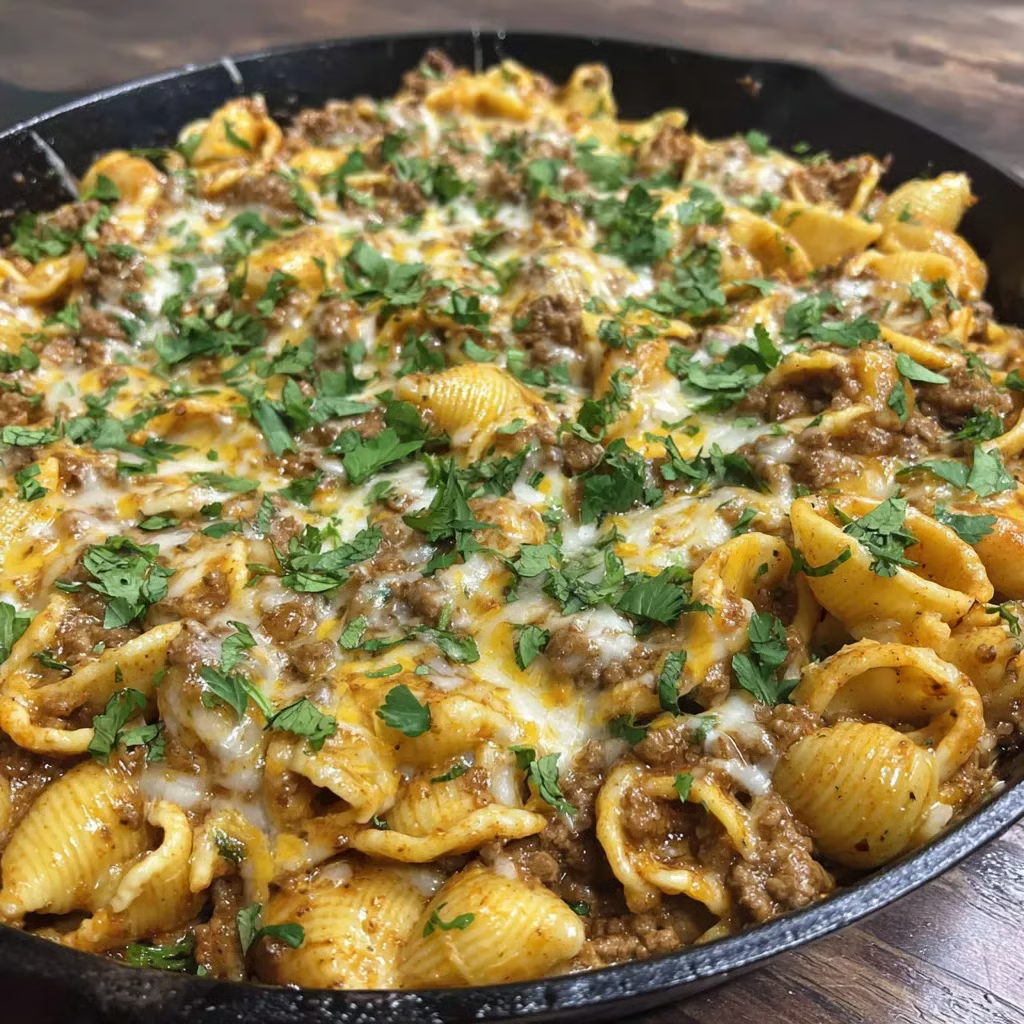
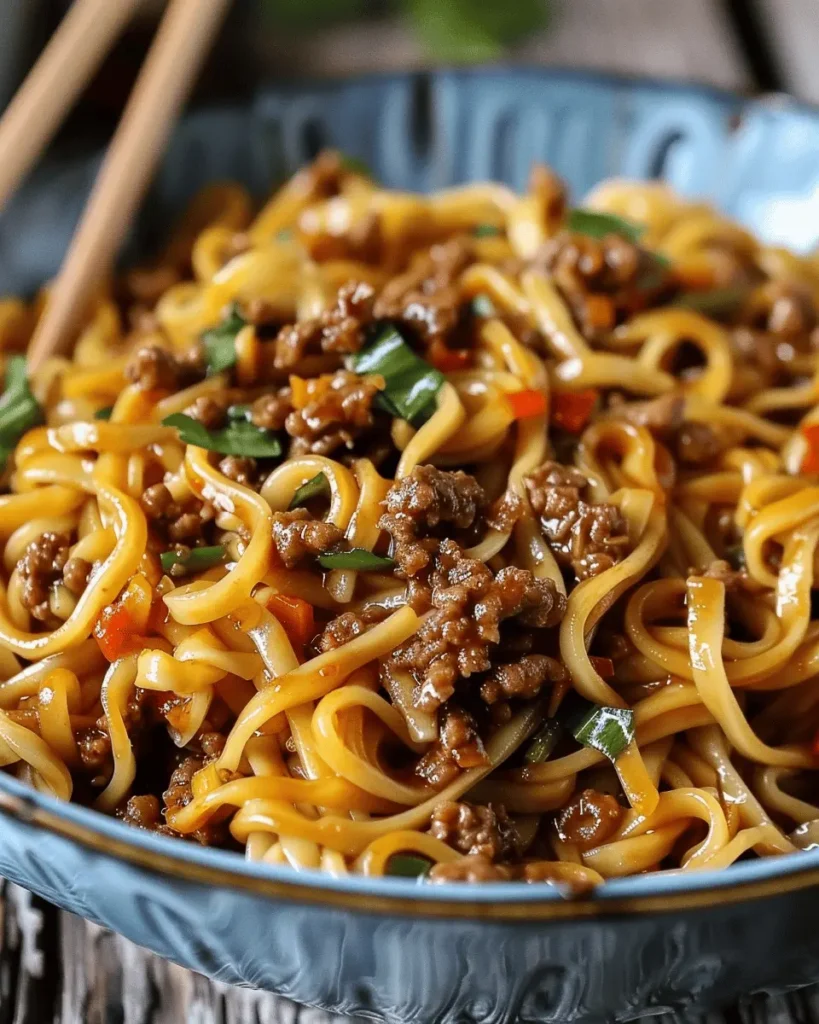
This quick Asian-inspired weeknight dinner combines savory ground beef with tender egg noodles tossed in a sweet-salty sauce made from soy sauce, brown sugar, aromatic garlic, and fresh ginger before folding in colorful bell peppers and finishing with green onions. The genius simplification—using ground beef instead of traditional sliced beef and skipping the deep-frying step—delivers the beloved flavors of restaurant Mongolian beef in just 25 minutes with straightforward stovetop cooking, creating the kind of satisfying, takeout-style comfort that makes everyone forget about ordering delivery.
Why You’ll Love This Recipe
- Lightning-Fast 25 Minutes – Ready from start to finish in less than half an hour with straightforward preparation perfect for hectic weeknights.
- Ground Beef Shortcut – Uses affordable ground beef instead of sliced steak, eliminating marinating and slicing while reducing cost significantly.
- Sweet-Salty Balance – The classic Mongolian sauce combining soy sauce and brown sugar creates addictive flavor that appeals universally.
- One-Skillet Efficiency – After boiling noodles separately, everything comes together in a single skillet, minimizing cleanup.
- Better Than Takeout – Delivers restaurant-quality Asian flavors at home for a fraction of the cost and with fresher ingredients.
- Customizable Vegetables – Easy to adapt with whatever vegetables you have available or prefer, making this versatile for various tastes.
Ingredients You’ll Need
For the Main Ingredients:
- 1 lb ground beef – Use 80/20 or 85/15 for flavor; leaner creates drier results
- 8 oz egg noodles – Wide egg noodles are traditional; lo mein or linguine work too
For the Mongolian Sauce:
- ¼ cup soy sauce – Provides salty, umami foundation; use low-sodium to control salt
- 2 tbsp brown sugar – Creates the signature sweet-salty balance; light or dark both work
- 2 cloves garlic, minced – Infuses pungent, aromatic depth
- 1 tbsp ginger, minced – Adds warm, spicy, fresh character essential to Asian flavors
- 1 tbsp sesame oil – Provides nutty, aromatic richness
For the Vegetables:
- 1 cup bell peppers, sliced – Any color works; adds sweet crunch and visual appeal
- ½ cup green onions, sliced – Contributes fresh, sharp onion flavor; reserve some for garnish
Step-by-Step Instructions
Cook the Noodles Bring a large pot of water to a rolling boil over high heat—no need to salt the water heavily since the sauce is quite salty. Add the egg noodles and cook according to package directions until tender, typically 6-8 minutes. Drain the noodles in a colander but don’t rinse—the residual starch helps the sauce cling. Set aside.
Brown the Ground Beef While the noodles cook, heat the sesame oil in a large skillet or wok over medium heat for about 1 minute until shimmering and fragrant. Add the ground beef, breaking it apart with a wooden spoon or spatula into small crumbles as it cooks. Continue cooking for 6-8 minutes, stirring occasionally and breaking up large pieces, until the beef is browned throughout with no pink remaining and has developed some crispy, caramelized bits. Don’t drain the fat unless there’s excessive amounts (more than 3-4 tablespoons)—some fat adds flavor and helps carry the sauce.
Add Aromatics Add the minced garlic and minced ginger to the browned beef. Stir continuously for about 1 minute until the garlic and ginger are fragrant and just beginning to soften—watch carefully as garlic burns quickly and bitter burnt garlic will ruin the dish. The sesame oil should smell intensely aromatic with the garlic and ginger.
Make the Sauce Immediately add the soy sauce and brown sugar to the skillet with the beef, garlic, and ginger. Stir thoroughly for about 1 minute until the brown sugar dissolves completely into the soy sauce, creating a glossy, sweet-salty sauce that coats the beef. The sugar should melt quickly in the hot pan.
Add Bell Peppers Add the sliced bell peppers to the skillet, stirring to coat them with the sauce. Cook for 3-5 minutes, stirring occasionally, until the peppers are tender-crisp—they should still have some bite and vibrant color rather than being completely soft. The peppers will release some moisture that thins the sauce slightly.
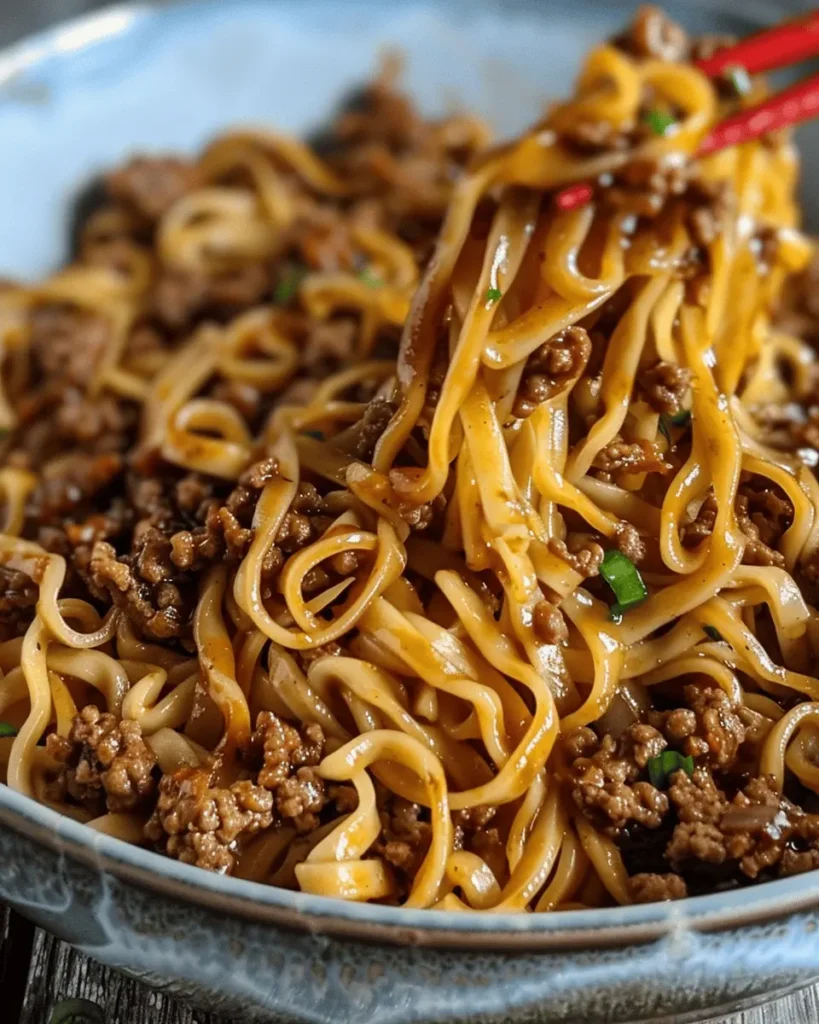
Combine with Noodles Add the drained, cooked egg noodles to the skillet with the beef-pepper mixture. Using tongs or two large forks, toss everything together vigorously for 1-2 minutes, lifting and turning to ensure every noodle gets coated with the sweet-salty sauce and the beef and peppers are evenly distributed throughout. The noodles should be glossy and well-coated.
Garnish and Serve Remove from heat. Garnish generously with the sliced green onions, scattering them over the top for color and fresh flavor. Divide among serving plates or bowls and serve immediately while hot. Offer additional soy sauce or sriracha on the side for those who want extra salt or heat.
Recipe Notes & Tips
- Ground Beef Fat – Use 80/20 or 85/15 ground beef for flavor; don’t drain unless excessive, as some fat carries flavor.
- Fresh Ginger Essential – Fresh ginger provides significantly better flavor than dried; grate or mince finely for even distribution.
- Soy Sauce Selection – Use regular or low-sodium soy sauce based on salt preference; low-sodium allows better control.
- Noodle Options – Egg noodles are traditional, but lo mein, udon, or even linguine work as substitutes.
- Vegetable Flexibility – Add or substitute snap peas, broccoli, carrots, or mushrooms based on preference.
- Sauce Adjustment – For saucier noodles, double the soy sauce and brown sugar; for less sweet, reduce brown sugar to 1 tablespoon.
Nutritional Information
Prep Time: 10 minutes
Cook Time: 15 minutes
Total Time: 25 minutes
Servings: 4 servings
Calories: Approximately 550 calories per serving (based on provided nutrition data)
Perfect Pairings
- Egg Rolls – Serve with crispy egg rolls or spring rolls for complete Asian-inspired meal.
- Steamed Edamame – Pair with lightly salted edamame for appetizer or side.
- Asian Slaw – Balance the richness with tangy, crunchy cabbage slaw dressed with sesame-ginger vinaigrette.
- Fried Rice – Complement with vegetable fried rice for even more substantial dinner.
Ideal Occasions
- Weeknight Dinners – Perfect for Tuesday or Wednesday when you want flavorful food without spending hours cooking.
- Takeout Alternative – Ideal when you crave Chinese takeout but want fresher, healthier, more affordable homemade version.
- Meal Prep – Great for batch cooking at the beginning of the week for quick lunches throughout.
- Family Favorites – Excellent for pleasing both kids and adults with familiar, crowd-pleasing Asian flavors.
Storage & Serving Tips
- Refrigerator Storage – Cool completely, store in airtight container for up to 4 days; noodles absorb sauce as they sit.
- Reheating Instructions – Warm in skillet over medium heat with splash of water or soy sauce to restore moisture; microwave works but reduces texture.
- Serving Temperature – Best served hot when the sauce is glossy and coating every noodle.
- Leftover Enhancement – Add fresh vegetables or a fried egg on top when reheating for renewed freshness.
Creative Variations to Try
- Spicy Mongolian – Add 1-2 teaspoons sriracha or red pepper flakes for heat lovers who want kick.
- Vegetable-Heavy – Add broccoli, snap peas, carrots, and mushrooms for more veggie-forward version.
- Sesame Topping – Garnish with toasted sesame seeds for nutty flavor and visual appeal.
- Different Proteins – Substitute ground turkey, chicken, or plant-based ground meat for beef.
Troubleshooting Common Issues
- Dry Noodles – Not enough sauce or cooked too long; double sauce ingredients or add splash of soy sauce when tossing.
- Bland Flavor – Insufficient seasoning or used low-sodium products; taste and adjust with additional soy sauce and brown sugar.
- Mushy Vegetables – Overcooked peppers; cook only 3-5 minutes until tender-crisp, not soft.
- Greasy Texture – Too much beef fat; drain excess if more than 3-4 tablespoons remains after browning.
Why This Recipe Works
This simplified Asian-inspired dinner succeeds by adapting the flavors of traditional Mongolian beef while using ground meat and streamlined technique that makes it accessible for busy weeknights. Traditional Mongolian beef uses thinly sliced flank steak that’s marinated, coated in cornstarch, and deep-fried before being tossed in sauce—a time-consuming, multi-step process. This version uses ground beef that browns quickly without marinating or frying while still providing savory, beefy flavor. Browning ground beef develops the Maillard reaction for complex flavor. Sesame oil provides the nutty, aromatic character essential to Asian cooking. Fresh garlic and ginger are crucial aromatics—garlic contributes pungent depth while ginger adds warm, spicy, slightly sweet character that defines Asian flavors. Sautéing them briefly in hot oil releases their aromatic compounds. The sauce combines soy sauce (salty, umami-rich from glutamates) with brown sugar (sweet, with subtle molasses notes) to create the signature sweet-salty balance that makes Mongolian-style dishes so addictive. The sugar caramelizes slightly in the hot pan, adding depth. Bell peppers add sweet crunch, vibrant color, and nutrition. Green onions contribute fresh, sharp onion flavor that cuts through richness. Tossing cooked noodles with the sauce-coated beef ensures even distribution and allows noodles to absorb flavor. At 550 calories per generous serving with 30 grams of protein, this delivers substantial satisfaction appropriate for hearty dinner.
Final Thoughts
Mongolian Ground Beef Noodles demonstrates that restaurant favorites can be successfully adapted for home cooking when you understand the essential flavors—sweet-salty sauce, aromatic garlic-ginger, savory beef—and apply streamlined techniques that preserve what makes the dish appealing while eliminating unnecessary complexity. The recipe proves that weeknight dinners don’t require choosing between speed and flavor—smart ingredient selection (ground beef instead of sliced), efficient sequencing (cook noodles while browning beef), and bold seasoning create genuinely delicious results in minimal time. This dish shows how Asian-inspired cooking at home can be more affordable, fresher, and healthier than takeout while still delivering the satisfying flavors that make people crave restaurant versions. Whether you’re navigating busy weeknights that need quick dinners, seeking takeout alternatives that save money, planning meal prep that provides easy lunches, or simply loving the sweet-salty, ginger-garlic flavors of Mongolian-style dishes, this versatile recipe adapts to your needs while consistently delivering that perfect forkful where tender egg noodles, savory ground beef, crisp bell peppers, and glossy sweet-salty sauce come together in quick, budget-friendly, absolutely delicious harmony that makes skipping takeout feel like an upgrade rather than a sacrifice and proves that homemade Asian-inspired comfort can be just as satisfying as restaurant versions while being faster, fresher, and entirely achievable any night of the week.