Introduction: Healthy, Fast, and Incredibly Delicious
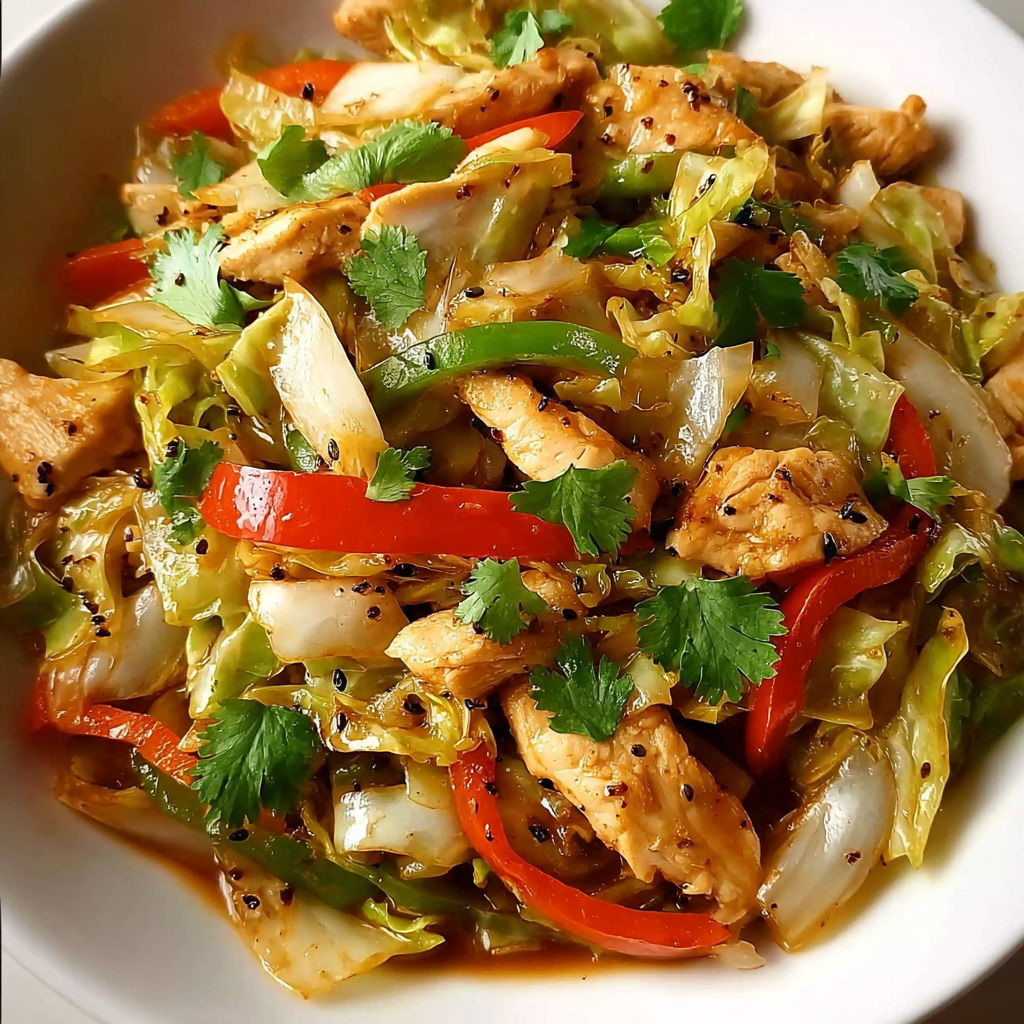
Forget ordering takeout—this Chicken and Cabbage Stir-Fry with Red and Green Bell Peppers is faster, healthier, and more delicious than anything you’ll get delivered. In just 20 minutes, you can create a restaurant-quality dish that’s packed with protein, loaded with vegetables, and coated in a savory-sweet sauce that will have you licking your plate.
Stir-frying is one of the most efficient and flavorful cooking methods in the world. The high heat creates that signature “wok hei” (breath of the wok)—those slightly charred, caramelized edges that add incredible depth of flavor. This recipe combines tender chicken with crunchy cabbage and vibrant bell peppers, all tossed in a glossy sauce that strikes the perfect balance between savory, sweet, and umami-rich.
Whether you’re looking for a healthy weeknight dinner, trying to use up vegetables in your fridge, meal prepping for the week, or simply craving something fresh and flavorful, this stir-fry checks all the boxes. It’s budget-friendly, customizable, naturally gluten-free (with easy substitutions), and can be on the table faster than delivery would arrive.
Let’s dive into creating this vibrant, veggie-packed stir-fry that will become your new go-to quick dinner!
Why You’ll Love This Chicken and Cabbage Stir-Fry
Lightning Fast: Ready in just 20 minutes from start to finish—perfect for busy weeknights.
Healthier Than Takeout: Packed with vegetables, lean protein, and way less sodium than restaurant versions.
Budget-Friendly: Cabbage is one of the most affordable vegetables, making this economical for feeding a family.
One-Pan Wonder: Everything cooks in one wok or large skillet for minimal cleanup.
Meal Prep Friendly: Makes great leftovers and can be portioned for the week ahead.
Versatile: Easily customize with your favorite vegetables or whatever you have on hand.
Colorful & Appetizing: Those vibrant peppers make this dish as beautiful as it is delicious.
Naturally Low-Carb: Perfect for keto, paleo, or anyone watching their carb intake (serve with cauliflower rice).
Kid-Friendly: The sweet-savory sauce appeals to even picky eaters.
Ingredients You’ll Need
For the Chicken:
- 1.5 lbs boneless, skinless chicken breast or thighs, cut into bite-sized strips
- 2 tablespoons soy sauce (or tamari for gluten-free)
- 1 tablespoon cornstarch (helps tenderize and creates velvety texture)
- 1 teaspoon sesame oil
- 1/4 teaspoon white pepper
For the Vegetables:
- 1 small head green cabbage (about 1 lb), cut into wide ribbons or 2-inch pieces
- 1 large red bell pepper, cut into thin strips
- 1 large green bell pepper, cut into thin strips
- 1 medium onion, sliced (yellow or white)
- 3 cloves garlic, minced
- 1 tablespoon fresh ginger, minced or grated
- 2 green onions, sliced (white and green parts separated)
For the Stir-Fry Sauce:
- 3 tablespoons soy sauce (or tamari)
- 2 tablespoons oyster sauce (or hoisin for vegetarian option)
- 1 tablespoon honey (or brown sugar)
- 1 tablespoon rice vinegar (or apple cider vinegar)
- 1 teaspoon sesame oil
- 1/2 teaspoon red pepper flakes (optional, for heat)
- 1/2 cup chicken broth (or water)
- 1 tablespoon cornstarch (for thickening)
- 1 teaspoon black pepper
For Cooking:
- 3 tablespoons vegetable oil (or peanut oil for authentic flavor), divided
- 1 teaspoon sesame seeds (for garnish)
- Fresh cilantro or parsley, chopped (for garnish)
Step-by-Step Instructions
Step 1: Marinate the Chicken (5 minutes + 10 minutes marinating)
Cut the chicken into thin, bite-sized strips (about 1/2 inch thick and 2 inches long). Cutting against the grain ensures tender pieces.
In a medium bowl, combine:
- Chicken strips
- 2 tablespoons soy sauce
- 1 tablespoon cornstarch
- 1 teaspoon sesame oil
- White pepper
Mix well with your hands until the chicken is evenly coated. The cornstarch creates a protective coating that keeps the chicken tender and helps thicken the sauce.
Let marinate for 10-15 minutes while you prep the vegetables and sauce.
Pro Tip: For even more tender chicken, add 1 teaspoon of baking soda to the marinade, let sit for 10 minutes, then rinse before cooking (this is a restaurant technique called “velveting”).
Step 2: Prepare Your Vegetables (10 minutes)
The key to successful stir-frying is having everything prepped and ready—”mise en place.”
Cabbage: Cut in half, remove core, then slice into wide ribbons about 1-2 inches wide. Don’t cut too thin—cabbage shrinks significantly when cooked.
Bell peppers: Remove seeds and membranes, cut into thin strips (julienne style) about 1/4 inch wide.
Onion: Peel and slice into thin half-moons.
Garlic and ginger: Mince finely (or use a microplane grater for ginger).
Green onions: Slice the white parts for cooking, reserve the green parts for garnish.
Pro Tip: Keep vegetables near your stove in separate bowls in the order you’ll add them.
Step 3: Make the Stir-Fry Sauce (3 minutes)
In a small bowl or measuring cup, whisk together:
- Soy sauce
- Oyster sauce
- Honey
- Rice vinegar
- Sesame oil
- Red pepper flakes (if using)
- Chicken broth
- Cornstarch (whisk well to dissolve—no lumps!)
- Black pepper
Set aside near your stove. Once stir-frying begins, everything happens fast!
Pro Tip: Taste the sauce and adjust to your preference—more honey for sweetness, more vinegar for tang, more soy sauce for saltiness.
Step 4: Stir-Fry the Chicken (4-5 minutes)
Heat a large wok or skillet over high heat until very hot (a drop of water should sizzle and evaporate immediately).
Add 2 tablespoons vegetable oil and swirl to coat the pan.
Add the marinated chicken in a single layer. Don’t overcrowd—work in batches if necessary. Let it sear for 1-2 minutes without stirring to get that golden-brown color.
Stir-fry (toss and flip constantly) for another 2-3 minutes until the chicken is cooked through (internal temperature 165°F) and has golden-brown edges.
Remove chicken to a clean plate. Don’t worry if it’s not 100% cooked—it will finish in the sauce later.
Pro Tip: High heat is crucial for stir-frying. If your heat is too low, vegetables will steam instead of getting that delicious char.
Step 5: Stir-Fry the Vegetables (5-6 minutes)
In the same wok, add the remaining 1 tablespoon oil.
Add the white parts of green onions, minced garlic, and ginger. Stir-fry for 30 seconds until fragrant (don’t let garlic burn).
Add the onions and stir-fry for 1 minute until slightly softened.
Add the bell peppers (red and green) and stir-fry for 2 minutes until they start to soften but still have crunch.
Add the cabbage and stir-fry for 2-3 minutes. The cabbage will seem like a lot at first but will wilt down significantly. Toss constantly to ensure even cooking.
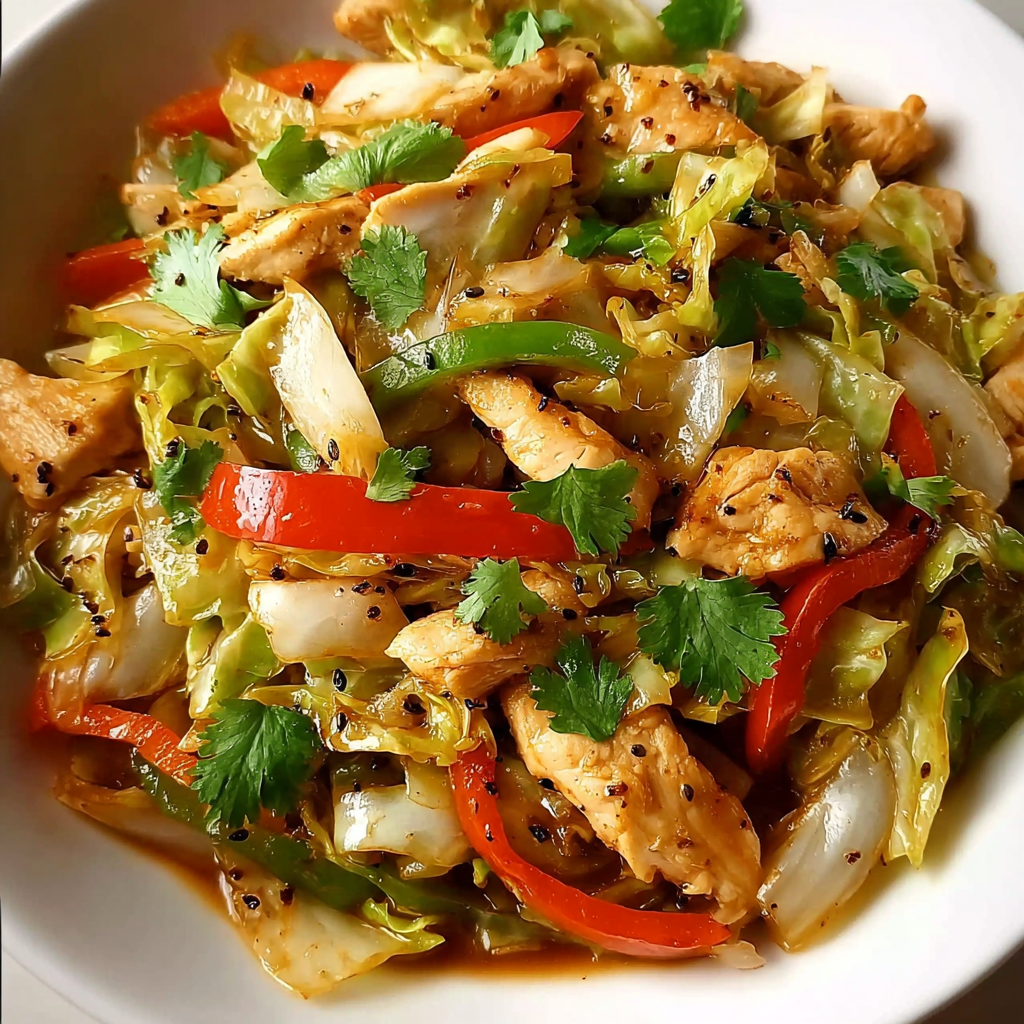
Doneness check: Vegetables should be tender-crisp (cooked but still have a bite), not mushy. Cabbage should be slightly translucent and have some caramelized edges.
Pro Tip: If your wok seems dry, add a splash of water or broth to create steam and prevent burning.
Step 6: Combine and Sauce (2-3 minutes)
Return the cooked chicken (and any accumulated juices) to the wok with the vegetables.
Whisk the sauce one more time (cornstarch settles), then pour it over everything in the wok.
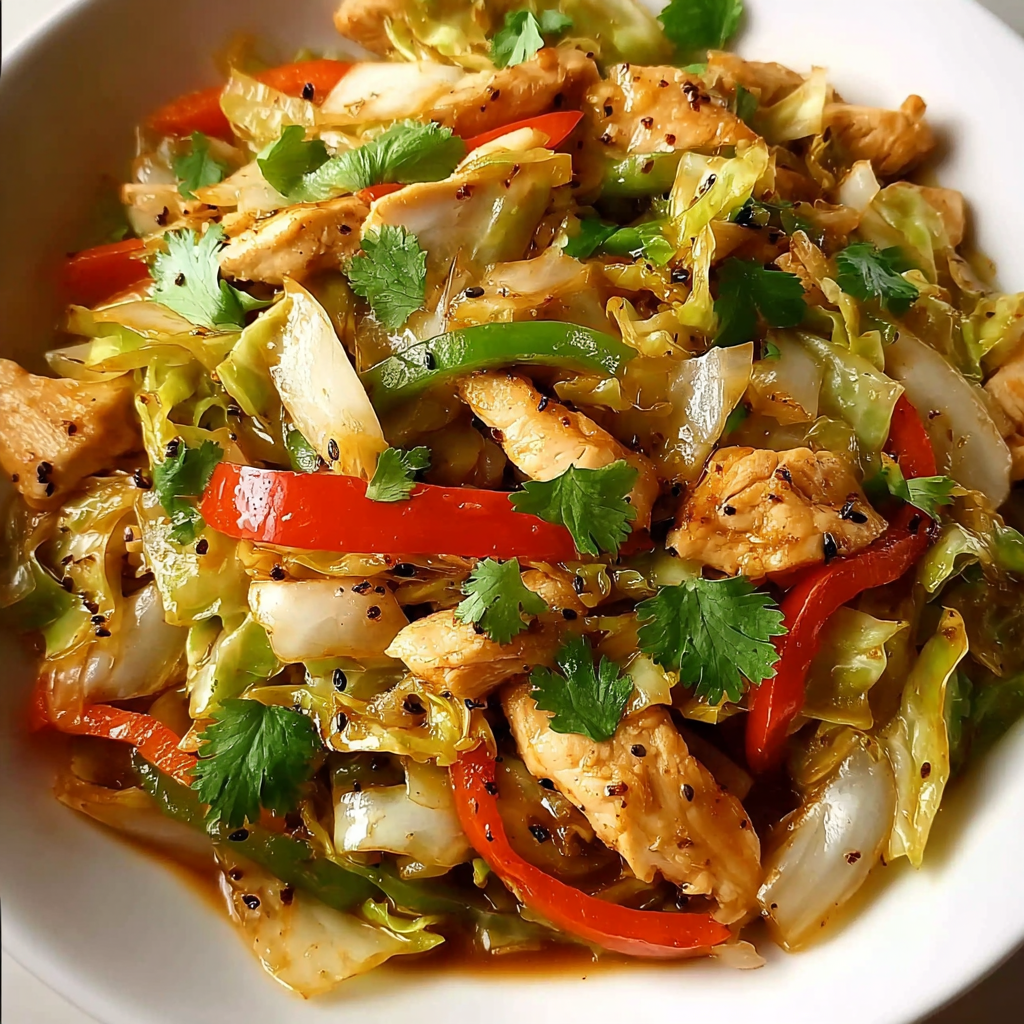
Toss everything constantly for 1-2 minutes until the sauce thickens and becomes glossy, coating all the chicken and vegetables evenly.
The sauce should bubble and reduce slightly, becoming thick enough to cling to the ingredients rather than pool at the bottom.
Taste and adjust: Add more soy sauce for saltiness, honey for sweetness, or vinegar for tanginess.
Remove from heat immediately—don’t overcook or vegetables will become mushy.
Step 7: Garnish and Serve (1 minute)
Transfer to a serving platter or individual plates.
Garnish with:
- Sliced green onions (the green parts)
- Sesame seeds
- Fresh cilantro or parsley
- Optional: Red pepper flakes for extra heat
Serve immediately while hot and vegetables are still crisp!
Tips and Tricks for Perfect Stir-Fry
High Heat is Essential: Stir-frying requires high heat to achieve that restaurant-quality sear and flavor. Don’t be afraid to crank it up!
Don’t Overcrowd: Too much food in the pan lowers the temperature, causing steaming instead of searing. Cook in batches if needed.
Keep Everything Moving: Stir-fry means constant motion. Use a spatula or toss the wok to prevent burning.
Cut Uniformly: All ingredients should be similar size for even cooking.
Dry Your Ingredients: Excess water creates steam and prevents browning. Pat chicken and vegetables dry.
Prep Everything First: Once you start cooking, there’s no time to chop. Have everything ready to go.
Use the Right Oil: High smoke-point oils (vegetable, peanut, avocado) work best. Olive oil burns too easily.
The Sauce Order: Always add sauce last, after everything is cooked, so it thickens properly.
Wok vs. Skillet: A wok is ideal but a large, heavy-bottomed skillet works well too. Just ensure it’s big enough.
Velveting Technique: That cornstarch in the chicken marinade creates restaurant-quality tender chicken every time.
Nutritional Information (Per Serving, based on 4 servings)
- Calories: 320
- Protein: 32g
- Carbohydrates: 22g
- Fat: 12g
- Saturated Fat: 2g
- Cholesterol: 85mg
- Sodium: 890mg
- Fiber: 5g
- Sugar: 10g
- Vitamin C: 180% DV
- Vitamin A: 45% DV
Note: This is a nutritious, balanced meal with plenty of protein and vegetables. To reduce sodium, use low-sodium soy sauce.
Delicious Variations to Try
Protein Swaps:
- Shrimp: Cook for just 2-3 minutes until pink
- Beef: Use flank steak or sirloin, sliced thin against the grain
- Pork: Pork tenderloin or thin pork chops work beautifully
- Tofu: Extra-firm, pressed and cubed for vegetarian version
- Combination: Mix chicken and shrimp for surf and turf
Vegetable Additions:
- Broccoli florets (blanch first for faster cooking)
- Snow peas or snap peas
- Carrots (julienned thin for quick cooking)
- Baby corn
- Water chestnuts (for extra crunch)
- Mushrooms (shiitake or button)
- Bean sprouts (add at the very end)
- Bok choy (instead of or in addition to cabbage)
Sauce Variations:
- Spicy: Add sriracha or chili garlic sauce
- Teriyaki Style: Use teriyaki sauce instead of oyster sauce
- Sweet and Sour: Add pineapple chunks and extra vinegar
- Black Bean Sauce: Add 2 tablespoons fermented black bean paste
- Szechuan: Add Szechuan peppercorns and doubanjiang (spicy bean paste)
- Thai-Inspired: Use fish sauce instead of soy sauce, add Thai basil
Carb Options for Serving:
- White or brown rice
- Fried rice
- Cauliflower rice (low-carb)
- Noodles (lo mein, rice noodles, or ramen)
- Quinoa (for extra protein)
Storage and Reheating Instructions
Refrigerator Storage: Store in an airtight container for up to 4 days.
Freezing: Can be frozen for up to 2 months. Note that cabbage texture may soften slightly upon thawing.
Reheating:
- Stovetop (best method): Reheat in a wok or skillet over high heat for 3-4 minutes, tossing constantly. Add a splash of broth if needed.
- Microwave: Heat in 1-minute intervals, stirring between, until hot throughout. May need to add a tablespoon of water.
- Oven: Spread on a baking sheet and reheat at 350°F for 10-12 minutes (vegetables will be softer).
Pro Tip: Stir-fries actually taste great cold! Enjoy as a cold salad the next day over greens.
Serving Suggestions
As a Complete Meal:
- Serve over steamed white or brown rice
- Toss with cooked noodles for a lo mein style dish
- Serve with cauliflower rice for low-carb option
- Pair with fried rice on the side
Appetizers to Serve Alongside:
- Spring rolls or egg rolls
- Pot stickers or dumplings
- Edamame with sea salt
- Cucumber salad with rice vinegar dressing
- Hot and sour soup or egg drop soup
Garnish Ideas:
- Crispy wonton strips for texture
- Crushed peanuts or cashews for crunch
- Extra chili oil for heat lovers
- Lime wedges for brightness
- Pickled ginger on the side
Beverage Pairings:
- Green tea or jasmine tea
- Cold beer (light lager or wheat beer)
- Sake (hot or cold)
- Riesling or Gewürztraminer (slightly sweet white wines)
- Ginger ale or sparkling water with lime
Frequently Asked Questions (FAQs)
Q: Can I use pre-shredded coleslaw mix instead of cabbage? A: Yes! Coleslaw mix (cabbage and carrots) works great and saves time. Just note it may cook faster since it’s already shredded thin.
Q: What if I don’t have a wok? A: A large, heavy-bottomed skillet (12-14 inches) works perfectly. Cast iron is ideal for heat retention.
Q: Can I make this gluten-free? A: Absolutely! Use tamari instead of soy sauce and check that your oyster sauce is gluten-free (or substitute with hoisin or more tamari).
Q: Why is my stir-fry watery? A: Likely causes: heat too low (vegetables release water), overcrowding the pan, or not letting chicken sear before stirring. Use high heat and don’t overcrowd!
Q: Can I use chicken thighs instead of breast? A: Yes! Thighs are actually more forgiving and flavorful. They take about the same cooking time when cut into strips.
Q: How do I get that “restaurant flavor”? A: High heat, proper wok hei (that slight char), fresh ginger and garlic, and the right balance of sauces. Don’t skip the sesame oil!
Q: Is oyster sauce necessary? A: It adds incredible umami depth, but you can substitute with hoisin sauce, more soy sauce with a pinch of sugar, or mushroom sauce.
Q: Can I make this ahead for meal prep? A: Yes! Cook fully, portion into containers with rice or noodles, and refrigerate. It stays fresh for 4 days.
Q: What’s the best way to cut cabbage for stir-fry? A: Cut into wide ribbons (1-2 inches) or rough chunks. Too thin and it becomes mushy; too thick and it won’t cook through in time.
Q: Can kids eat this? A: Definitely! Reduce or omit the red pepper flakes for mild version. The sweet-savory sauce appeals to most kids.
The Science of Great Stir-Fry
Understanding the science helps you master this technique:
Maillard Reaction: The browning and flavor development that occurs when proteins and sugars react at high heat (300°F+). This is why high heat is essential.
Wok Hei: Literally “breath of the wok”—the smoky, slightly charred flavor that comes from cooking over extremely high heat in a well-seasoned wok.
Velveting: The cornstarch coating on chicken creates a protective barrier that keeps moisture in and prevents overcooking, resulting in restaurant-quality tender meat.
Quick Cooking: The brief, high-heat cooking preserves nutrients (especially vitamin C), color, and texture in vegetables.
Sauce Thickening: Cornstarch gelatinizes when heated with liquid, creating that glossy, clingy sauce that coats ingredients rather than pooling.
Conclusion: Your New Weeknight Hero
This Chicken and Cabbage Stir-Fry with Red and Green Bell Peppers is proof that healthy eating doesn’t have to be boring or time-consuming. In just 20 minutes, you can create a vibrant, flavorful meal that’s packed with nutrition, beautiful to look at, and satisfying enough to keep you full for hours.
The beauty of stir-frying is its flexibility—once you master the technique, you can adapt it to whatever vegetables and proteins you have on hand. It’s a cooking method that rewards high heat, quick movements, and good preparation. The result is food that’s crispy, tender, and bursting with flavor in every bite.
Whether you’re trying to eat healthier, save money on takeout, or simply discover new weeknight dinner ideas, this stir-fry delivers on all fronts. It’s become a staple in kitchens around the world because it’s fast, economical, endlessly customizable, and genuinely delicious.
So heat up that wok, embrace the high heat, and get ready to create a dish that will have your family asking, “Can we have this again tomorrow?” Because yes, it really is that good!
Happy stir-frying! 🥬🌶️🍗✨